

Why Do Animals’ Eyes Glow in the Dark? The Real Reason

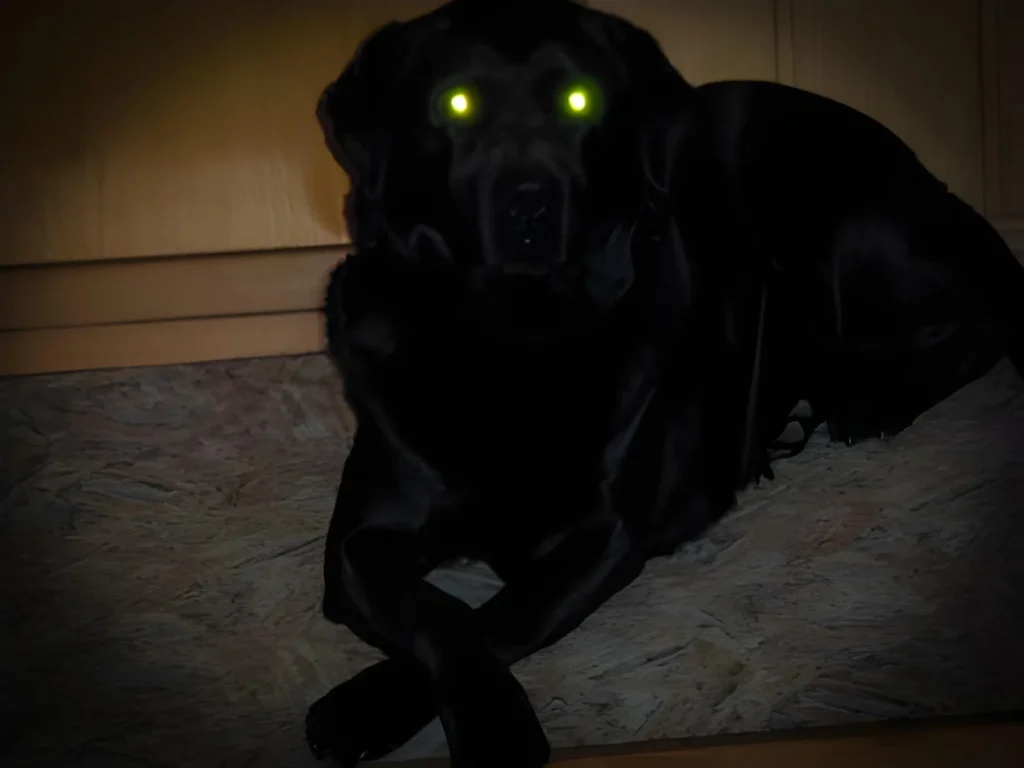
You’re outside at night. You sweep your flashlight across the yard. And then boom. Two bright eyes are staring right back at you from the dark. Your heart skips a beat. You freeze.
But it’s just a cat. Or maybe a deer. Or a raccoon sitting near the fence. So here’s the question that hits you right after the panic settles: Why Do Animals’ Eyes Glow in the Dark?
You’ve probably seen it a hundred times and never really thought about it. But the reason is actually really cool and a little weird. Once you know it, you’ll never look at glowing eyes the same way again.
A Tiny Mirror is Hiding Inside Their Eyes
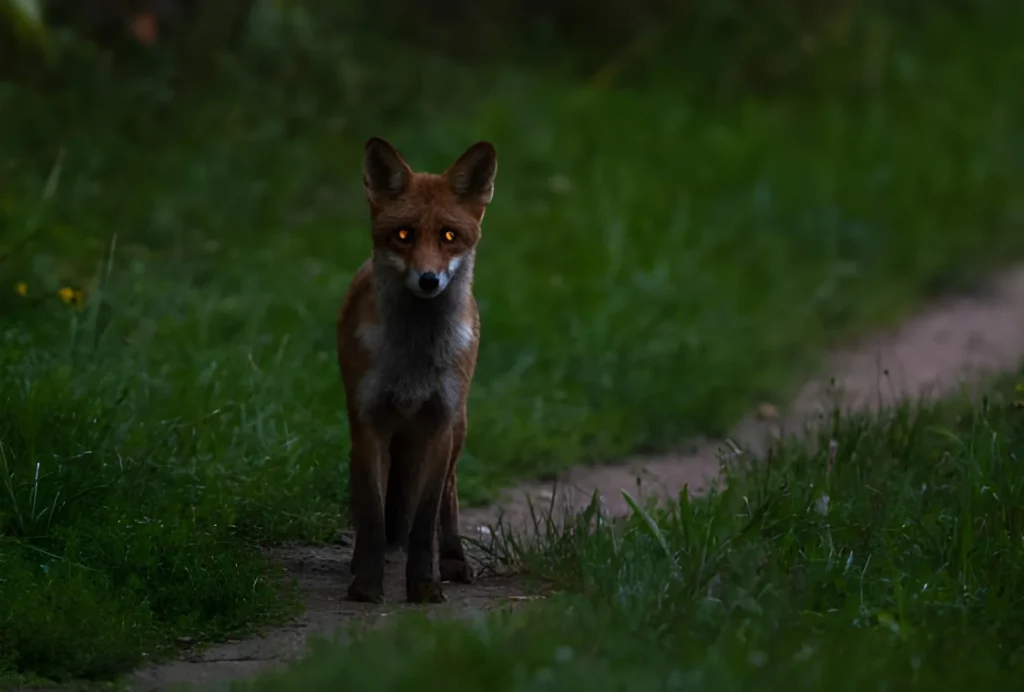
No, seriously. A mirror.
Many animals have a special layer sitting right behind the part of the eye that sees (called the retina). This layer acts exactly like a mirror. Scientists call it the tapetum lucidum, which is just Latin for “bright tapestry” or “carpet of light.”
Here is exactly what happens inside the eye, step by step:
- Light goes into the eye through the pupil (the black circle in the middle).
- It hits the retina (the seeing part at the back of the eye), and the eye tries to grab as much of that light as possible.
- Some light slips through without being caught.
- That leftover light hits the tapetum lucidum, the mirror layer, and gets bounced straight back.
- The retina now gets a second chance to use that same light.
- Whatever light escapes the eye after that second bounce, that’s the glow you see in the dark.
That’s it. That’s the whole trick.
The eyes are not making their own light. They are not glowing on their own. They are just reflecting (bouncing back) the light that already exists from your flashlight, from car headlights, from the moon.
No light source around? No glow. Simple as that.
But Why Did Animals Develop This at All?
Because night is tough.
If you’re an animal trying to hunt, find food, or avoid being eaten, and it’s pitch black outside, you need every tiny bit of light you can get.
The mirror layer gives animals a huge advantage: it lets them use the same light twice. So instead of wasting light that slips past the retina (the seeing layer), the eye recycles it. The animal sees better. Much better.
Take cats, for example. A cat can see clearly in light that is six times darker than what humans need to see anything at all. That’s not just good night vision, that’s on a completely different level.
Two groups of animals benefit the most from this:
- Hunters like cats, foxes, and wolves, they can chase prey in the dark when their victims can barely see anything.
- Hunted animals like deer and rabbits, they spot danger coming before it’s too late.
But here’s the one downside: all that light bouncing around inside the eye makes the image a tiny bit blurry (not perfectly sharp). Like when a photo is overexposed (too much light hits the camera and the picture looks washed out). So these animals sacrifice a little sharpness to gain a lot of dark vision. For a night hunter, that trade is absolutely worth it.
Why Do Some Eyes Glow Green and Others Glow Red?
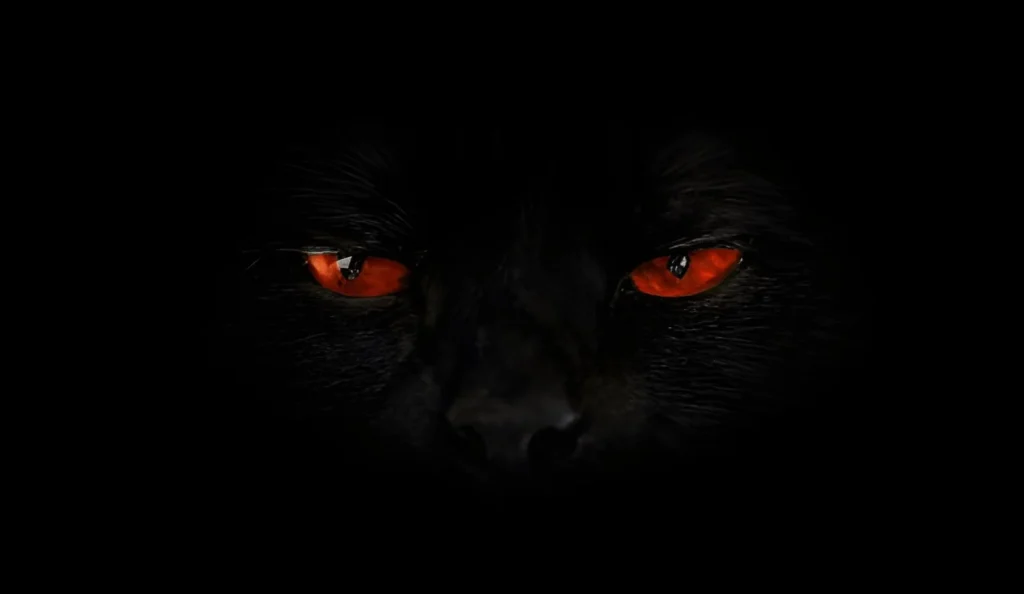
Not all glowing eyes look the same. Some animals glow bright green. Some glow orange. Some glow white, blue, or red. The color depends on a few things:
- What minerals are inside the mirror layer (things like zinc, riboflavin (a type of vitamin B), or guanine (a crystal-like substance found in fish scales, too))
- How much pigment (natural coloring) is in the retina
- The age of the animal
- The angle of the light hitting the eye
Here’s a simple guide to what color different animals glow:
| Animal | Eye Glow Color |
| 🐱 Cat | Bright green or yellow |
| 🐶 Dog | Blue-green or white |
| 🦌 Deer | White or pale yellow |
| 🦊 Fox | White or amber (orange-yellow) |
| 🐊 Alligator | Fiery orange-red |
| 🕷️ Spider | Bright green |
| 🐸 Bullfrog | Glowing emerald green |
| 🐻 Black Bear | Red-orange |
| 🦁 Lion / Big Cats | Copper yellow |
Even two dogs of the same breed can glow slightly different colors depending on their age and body chemistry. Miniature Schnauzers are famous for their striking turquoise (blue-green) eyeshine, one of the most unusual in the entire dog world.
So Why Don’t Human Eyes Glow?
Because we don’t have that mirror layer at all.
Humans never evolved (developed over millions of years) to need one. Instead of a reflective (light-bouncing) layer, we have dark-colored cells behind our retina that do the exact opposite, they absorb (soak up) leftover light rather than bounce it back.
This gives us sharper vision and much better color recognition during the day. Our ancestors were daytime creatures. Seeing clearly in sunlight, spotting ripe fruit, reading faces, and judging distances mattered more than creeping around in the dark.
So we made a deal with evolution: great daytime vision in exchange for terrible night vision.
That said, human eyes do produce one tiny version of eyeshin, the red-eye effect in photos. You know that annoying red glow in your eyes when someone takes a flash photo? That’s light from the camera bouncing off the red blood vessels (tiny tubes that carry blood) behind your retina. So technically, your eyes do glow, just red, just in photos, and it looks terrible every single time. Want to read about another animal ability humans completely lack? Check out our post on are bats really blind. The truth about bat senses will genuinely surprise you.
Not Every Animal Has Glowing Eyes — This List Will Surprise You
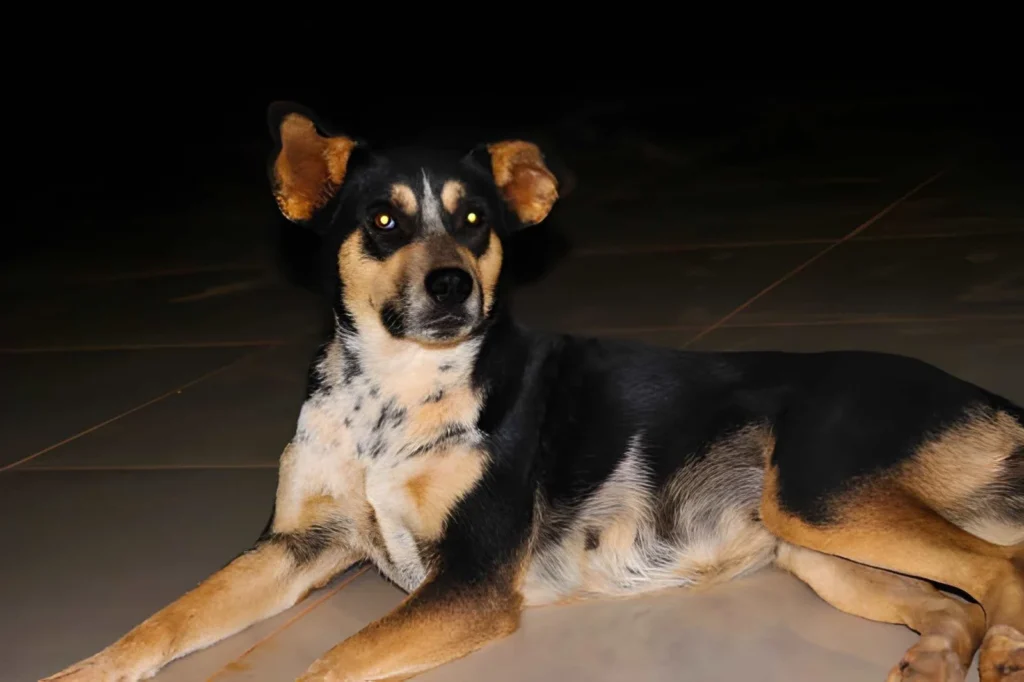
You’d think all nighttime animals have this, right? Not even close.
Animals that DO have the mirror layer (glowing eyes):
- Cats, dogs, wolves, and foxes
- Deer, horses, cows, sheep, and goats
- Sharks, crocodiles, and alligators
- Some deep-sea fish
- Spiders, frogs, and bullfrogs
- Lemurs (small, wide-eyed primates from Madagascar) and bush babies
Animals that do NOT have it (surprising ones):
- Monkeys and other apes
- Pigs
- Most birds, yes, even owls in many cases
- Most rodents (rats, squirrels, mice)
- Most snakes and reptiles (scaly animals)
Wait, owls don’t have it? Owls are famous night hunters. How do they see so well in the dark without this mirror layer?
Simple, they use a completely different solution. Owls have enormous eyes for their body size. So big, in fact, that the eyes can’t move at all inside the skull (that’s why owls spin their whole head to look around). Their eyes are also packed with an incredible number of rod cells (the cells that pick up light in dim conditions). More rods = better night vision, no mirror layer needed. For more on strange bird biology, our post on 7 shocking facts about the most poisonous bird in the world is one you genuinely won’t expect.
5 Wild Facts About Glowing Eyes That Nobody Talks About
1. You can find spiders in your garden at night using just a flashlight.
Hold a flashlight right next to your eyes and shine it low across a grassy area at night. Dozens of tiny bright green dots will light up in the grass, each one is a spider looking back at you. Eyeshine always reflects directly back toward the light source, so holding the light close to your eyes is the key. Try it — it works.
2. Reindeer eyes literally change color between summer and winter.
In summer, reindeer eyeshine is golden. In winter, when the Arctic (the freezing region around the North Pole) goes months without sunlight, its eyeshine shifts to deep blue. This change adjusts their sensitivity to different types of light. Scientists recently found that reindeer living near artificial streetlights are losing this ability. The light pollution (artificial light messing with natural conditions) is confusing their eyes and leaving them stuck mid-change, which actually hurts their ability to survive the Arctic winter.
3. Ancient Egyptians thought cats were storing sunlight in their eyes.
Cat eyes have one of the most powerful mirror layers of any animal, nearly 130 times more reflective than human eyes. The ancient Egyptians watched cats’ eyes glow brilliantly at night and concluded that cats were somehow storing the sun’s light and releasing it after dark. This mysterious quality is one big reason cats were treated as sacred (holy and untouchable) animals in ancient Egypt.
4. The reflective studs on roads were invented because of a cat’s eyes.
In 1933, a British man named Percy Shaw was driving home through thick fog when his headlights caught the reflection in a cat’s eyes sitting at the roadside. That reflection showed him exactly where the road edge was and probably saved his life. He went on to invent the small reflective road markers you see on highways everywhere in the world today. They’re officially called retroreflectors (objects that bounce light back to where it came from), but are nicknamed cat’s eyes after the moment that inspired them.
5. Sharks have this mirror layer too, and it helps them hunt in pitch-black water.
Sharks that hunt in deep, dark ocean water have the same reflective layer in their eyes. In the deep sea, where almost no light reaches, this gives them a serious edge over the creatures they hunt. For more on what makes sharks so impossibly well-built for survival, our post on “do sharks have bones or lungs” breaks it all down in a way that will genuinely shock you.
The next time a pair of glowing eyes stares back at you from the dark, don’t be scared. Be amazed.
You’re looking at millions of years of evolution (gradual change and improvement in living things over a very long time) packed into a tiny layer of tissue smaller than a fingernail. A biological (living, natural) mirror that lets animals see in conditions that would leave us completely blind, stumbling around and bumping into things.
Nature didn’t just solve the problem of seeing in the dark. It solved it with something genuinely beautiful.
And it’s been staring back at us all along.