

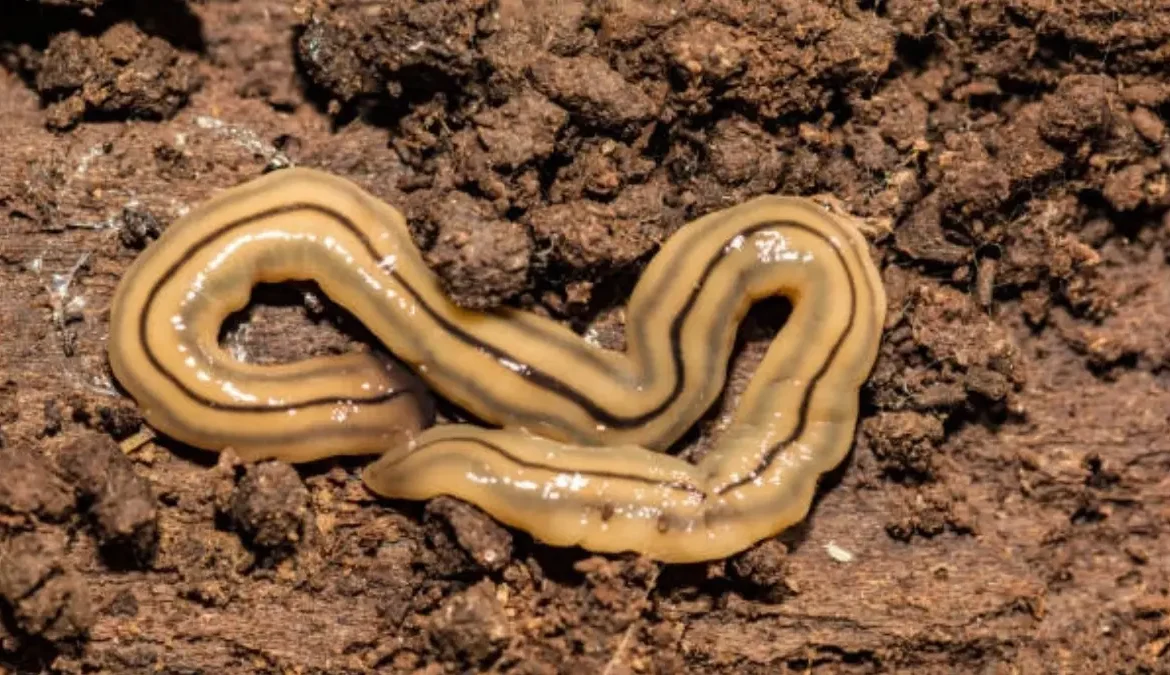
Flatworms: Nature’s Weirdest Love Story – They Literally Stab Each Other With Penises!
What Are Flatworms? Understanding These Bizarre Creatures From Scratch
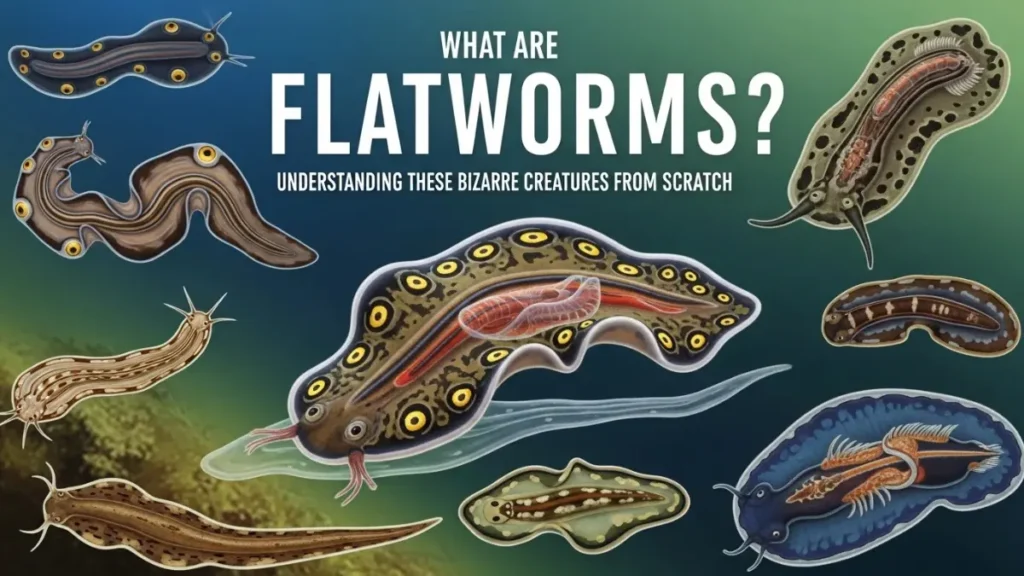
Listen, if you think nature is boring, you haven’t met flatworms. Imagine being a creature that’s both male and female, living on a coral reef, and when you meet another like yourself, you don’t date, you stab each other with your penises. Welcome to the insane world of flatworms: creatures that make soap opera drama look tame.
In this guide, you’ll discover penis fencing battles, hypodermic insemination, regeneration abilities, and why lonely flatworms literally stab themselves. If you’re interested in other creatures with unusual reproductive strategies, check out our guide on 10 Animals That Change Gender.
How Big Are Flatworms? Size, Shape And Physical Structure Explained
Flatworms are soft-bodied animals thinner than a playing card. Most measure less than 1 millimeter thick yet grow 3–14 centimeters long. According to PubMed Central, flatworms belong to the phylum Platyhelminthes and are classified as marine invertebrates.
They’re like biological credit cards gliding across coral reefs, covered in brilliant neon colors: electric blues, hot pinks, screaming oranges, and vivid yellows.
Why Are Flatworms So Thin? The Evolutionary Advantage Of A Paper-Thin Body
The extreme thinness is evolutionary genius, not a weakness:
No Lungs Required – Oxygen passes directly through their thin skin. Thicker animals need lungs; flatworms don’t.
Perfect Escape Route – They squeeze into 1mm cracks where predators cannot follow. Fish cannot chase what’s thinner than a blade of grass.
Secret Hunting Advantage – Flatworms access prey hidden in tight spaces that other predators cannot reach.
Energy Efficient – Less body mass requires less energy. Flatworms survive longer without food than much larger creatures.
Are Flatworms Male Or Female? Understanding Hermaphrodite Reproduction
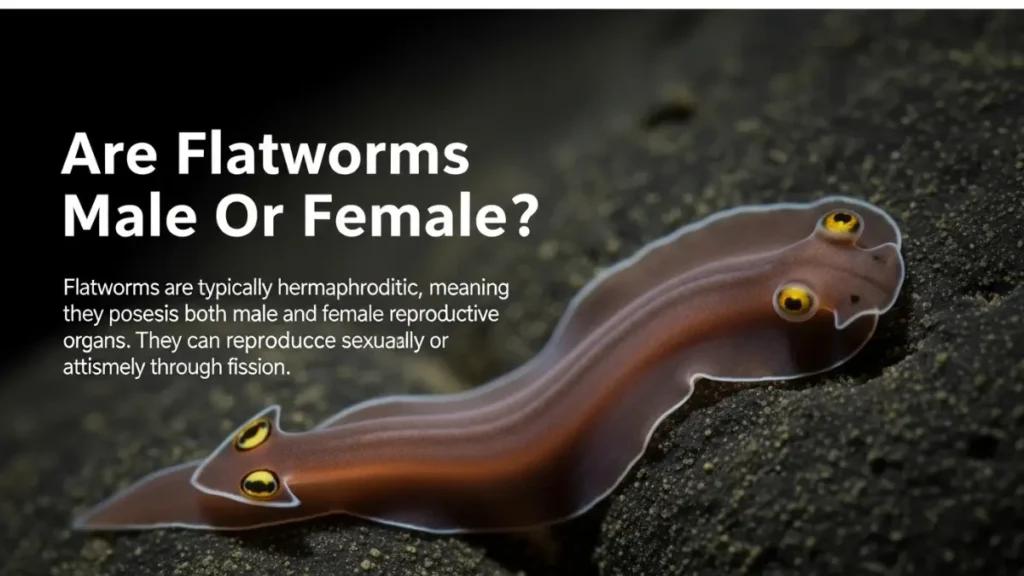
Here’s the key: Every flatworm is both male and female. Each flatworm has reproductive organs for producing sperm AND ovaries for producing eggs. Theoretically, any flatworm can reproduce with any other flatworm.
But here’s the biological conflict:
Making eggs is EXPENSIVE – Requires massive energy. Flatworms make eggs slower, more vulnerable, and easier to kill.
Making sperm is CHEAP – Requires minimal energy. Flatworms stay fast, alert, and dangerous.
Therefore, every flatworm wants to be the father rather than the mother.
How do they resolve this? Through the most violent, bizarre solution in the animal kingdom: penis fencing.
What Is Penis Fencing? How Flatworms Fight To Determine Parenthood
Penis fencing is a mating battle where two flatworms fight with their penises to determine who becomes the mother. The winning flatworm becomes the father (easy job). The losing flatworm becomes the mother (a hard job to carry eggs).
According to Michiels & Newman (1998) published in Proceedings of the Royal Society B, penis fencing is real, documented, and filmed in multiple flatworm species, including Pseudobiceros hancockanus.
How Does Penis Fencing Work? The Step-By-Step Battle Process
STEP 1: CIRCLING – Two flatworms meet on the reef at night. They circle each other slowly for 5–10 minutes, assessing strength and searching for advantage.
STEP 2: STANDOFF – Both flatworms extend their penises (called stylets)—needle-sharp, hardened protein structures that look like tiny swords.
STEP 3: ATTACK – Both flatworms jab repeatedly, trying to pierce each other’s skin. The fight is violent. Bleeding occurs. Battles last 10 minutes to over 1 hour.
STEP 4: INJECTION – One flatworm succeeds, piercing the opponent’s skin and injecting a sperm packet (called a spermatophore) directly into the body.
STEP 5: ESCAPE – The victorious flatworm immediately flees into darkness, having successfully passed genes while avoiding expensive motherhood.
STEP 6: BURDEN – The defeated flatworm now carries fertilized eggs inside its body. For weeks, it must devote massive energy to developing babies. It moves more slowly, hunts worse, and becomes more vulnerable.
Why Did Flatworms Evolve Penis Fencing? The Natural Selection Story
Over millions of years, flatworms that fought hard to avoid motherhood had more energy, reproduced more successfully, and passed aggressive genes to offspring. Natural selection created tiny, bisexual sword-fighters. Evolution doesn’t care if it’s weird—it only cares if it works.
How Do Flatworms Hunt? Understanding The Pharynx Feeding Mechanism
Flatworms are hunters without teeth or stomachs. Instead, they have a pharynx—a muscular tube they push OUT of their mouth to attack prey. If this sounds gross, wait.
What Do Flatworms Eat? Prey, Feeding Behavior, And Diet Explained
DETECTION – A flatworm spots prey: a tiny snail, crustacean, or worm.
PHARYNX EXTENSION – The flatworm pushes its pharynx (a white, fleshy muscular tube) out of its mouth like a straw.
ENZYME RELEASE – The flatworm releases powerful digestive enzymes directly onto prey. According to PubMed, this external digestion allows flatworms to consume prey much larger than their body size.
CONSUMPTION – The flatworm contracts its pharynx, creating suction. The liquefied prey (now nutrient soup) is sucked inside. The entire meal is consumed in minutes.
Basically: flatworms vomit acid onto food, then slurp the resulting soup. It’s disgusting. It’s brilliant. It’s 100% real.
How Does Flatworm Digestion Work? The One-Hole Body Opening System
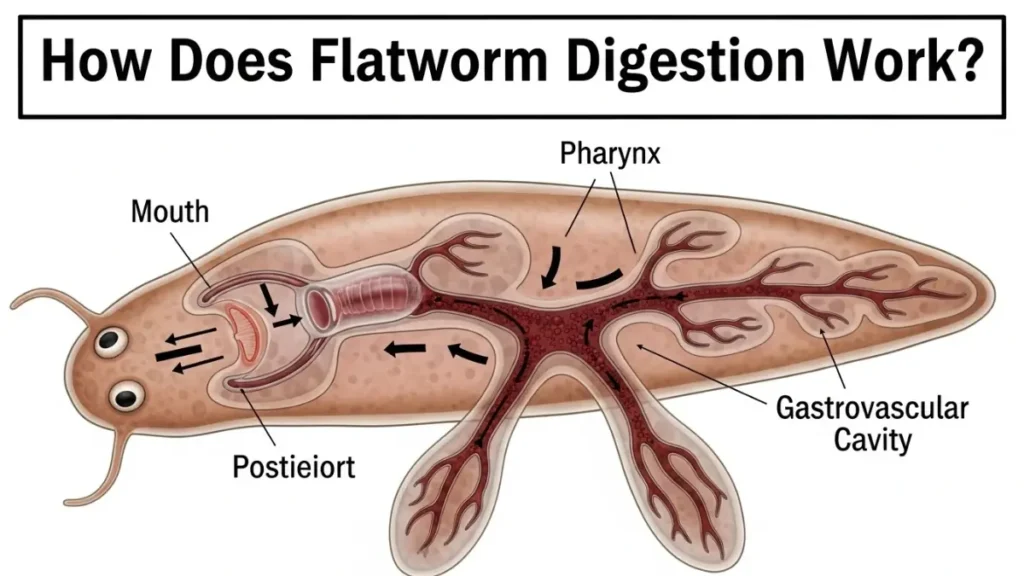
Here’s what’s genuinely bizarre: Flatworms have only ONE body opening.
This hole serves as:
- Mouth (food enters)
- Anus (waste exits)
The same hole does both jobs. You’re thinking, “That’s disgusting!” But honestly? For a thin flatworm living in tight spaces, one opening saves energy and reduces complexity.
So yes: flatworms poop out of the same hole they eat from.
Biology is weird.
How Many Eggs Do Flatworms Lay? Reproduction Numbers That Shock Scientists
After losing penis fencing, a flatworm becomes the mother and must produce eggs. The numbers are staggering.
One flatworm species, called Pseudoceros indicus, laid 1,307 eggs in just 50 days. Another laid 3,073 EGGS across multiple batches.
THREE THOUSAND EGGS from a creature smaller than your pinky. This data comes from Rawlinson (2014) published in Invertebrate Systematics, a peer-reviewed journal documenting detailed reproductive cycles across flatworm species.
It’s insane. It’s incredible. It’s why flatworms haven’t gone extinct.
How Do Flatworms Lay Eggs? Egg Capsules, Hatching Times, And Development
Mom flatworms lay eggs in jelly-like capsules glued to hard surfaces: rock, coral, driftwood. These capsules protect developing embryos from predators and environmental damage.
Hatching times depend on water temperature:
Warm water (27°C): ~11 days
Normal water: 2–6 weeks
Rule: Warmer water = faster development
Baby flatworms are born free-swimming, drifting with ocean currents. Over days or weeks, they settle on the reef, flatten into adult form, and immediately start hunting and fighting like their parents.
Do Flatworms Reproduce Alone? The Wild Self-Insemination Mystery Explained
Here’s where flatworms get genuinely insane: If a flatworm cannot find a mating partner for extended periods, eggs inside its body remain unfertilized. Solution? The flatworm fertilizes itself.
What Is Hypodermic Self-Insemination? How Flatworms Stab Themselves
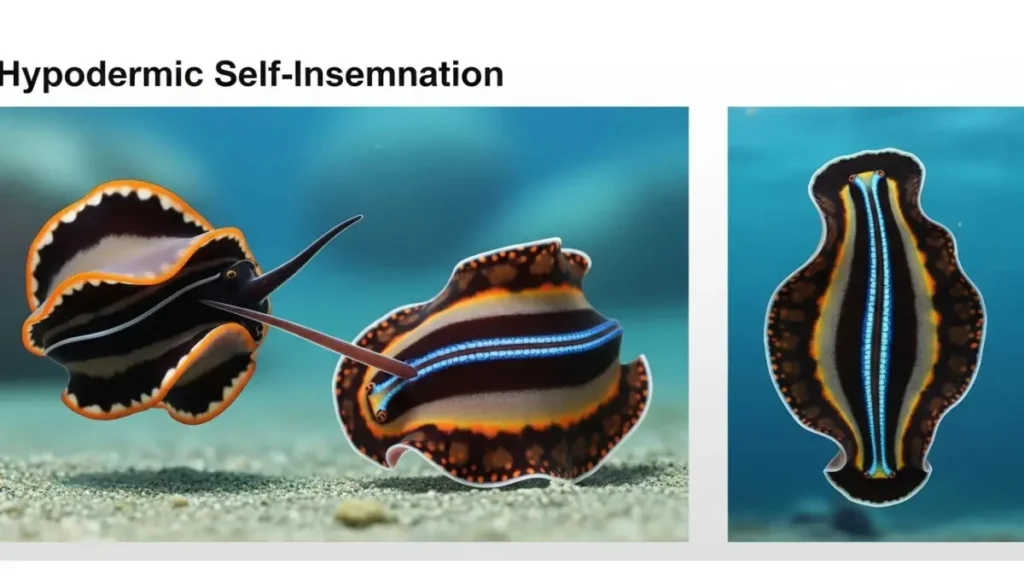
When isolated, a flatworm develops sperm in its head region. Then the flatworm CURLS AROUND and stabs itself in its own head with its own penis.
The flatworm is literally self-stabbing.
Sperm from the head navigate through the flatworm’s body back to the eggs. Fertilization happens. Babies are made.
This is called hypodermic self-insemination—the most depressing and metal thing in nature simultaneously.
Why does evolution allow this? A lonely flatworm that self-fertilizes produces offspring. A lonely flatworm that cannot self-fertilize produces zero offspring. Natural selection favors self-stabbing flatworms. It’s weird. It’s sad. It’s effective.
Can Flatworms Regrow Body Parts? The Regeneration Superpower Explained
Here’s where flatworms become biological superheroes:
If you cut a flatworm completely in half:
Front half: Regrows tail, reproductive organs, and digestive system in 2–4 weeks. Becomes fully functional.
Back half: Regrows head and reproductive organs in 2–4 weeks. Becomes fully functional.
Result: One flatworm becomes two identical flatworms. It’s biological photocopying.
What Are Neoblasts? How Stem Cells Enable Flatworm Regeneration
Flatworms regenerate using special cells called neoblasts—primitive stem cells capable of becoming:
Muscle tissue, nerve tissue, skin, digestive organs, reproductive organs—literally anything.
According to Sánchez Alvarado’s 2000 study published in the Development journal, neoblasts are pluripotent stem cells capable of differentiating into virtually any tissue. This research opened new avenues for understanding regenerative biology.
Flatworm regeneration has HUGE implications for human medicine. If scientists understand neoblast mechanisms, maybe humans could regenerate lost limbs, heal spinal injuries, or repair brain damage.
When Are Flatworms Active? Day Vs Night Behavior And Lifestyle
Most flatworms are nocturnal—active at night, inactive by day.
Nighttime: Hunt, fight, reproduce, lay eggs, actively move across the reef
Daytime: Hide in cracks, shelter under ledges, stay motionless to avoid predators
Why Are Flatworms Brightly Colored? Understanding Warning Colors And Toxins
Those bright neon colors aren’t decoration, they’re warning labels saying: “I’m toxic. I taste like poison. Eat me, and you’ll regret it.”
When a fish eats a brightly-colored flatworm and gets poisoned, it learns instantly. That fish avoids all bright creatures forever. The bright flatworm colors protect the entire species.
For more about warning colors and toxic defenses, check out Can I Touch a Poison Dart Frog.
How Long Do Flatworms Live? Understanding Lifespan And Longevity
Most flatworms live a few years in the wild. Lifespans vary based on predation, food availability, water temperature, and disease.
Common Questions About Flatworms: Answers To Your Biggest Questions

Q: Is penis fencing real?
A: Yes. Michiels & Newman (1998) documented it in peer-reviewed journals.
Q: How many eggs can flatworms lay?
A: Thousands per year. Some species lay 3,073 eggs in 50 days.
Q: Can flatworms regenerate?
A: Yes. Cut in half, both pieces become complete flatworms in 2–4 weeks.
Q: Are flatworms dangerous?
A: Most aren’t. Some contain toxins, but they can’t inject venom.
Q: Where do flatworms live?
A: Tropical and subtropical coral reefs worldwide. Most active at night.
Q: Do flatworms have predators?
A: Yes. Fish, crabs, and other worms hunt flatworms.
Q: Can you keep flatworms in aquariums?
A: Yes. Some species are popular for their colors and algae-eating abilities.
