

Can I Touch a Poison Dart Frog? The Shocking Truth
The Story That Changes Everything
Sarah’s fingertips went numb 10 minutes after brushing against a golden blur in Colombia’s rainforest. By the 30-minute mark, she couldn’t feel her hands. Her guide’s face went white. “Did that touch your skin?” One look at the scratch on her arm told him everything. They had maybe 2 hours to reach help, but the clinic was 3 hours away.
What happened next shocked researchers. Sarah survived. And the reason why could save your life.
Table of Contents
The Answer Everyone Gets Wrong
Type “can I touch a poison dart frog” into Google, and you’ll get 50 contradictory answers. Some scream instant death. Others claim total safety. So what’s the truth?
Here’s what nobody tells you: The answer depends entirely on where the frog came from.
Wild poison dart frogs in rainforests?
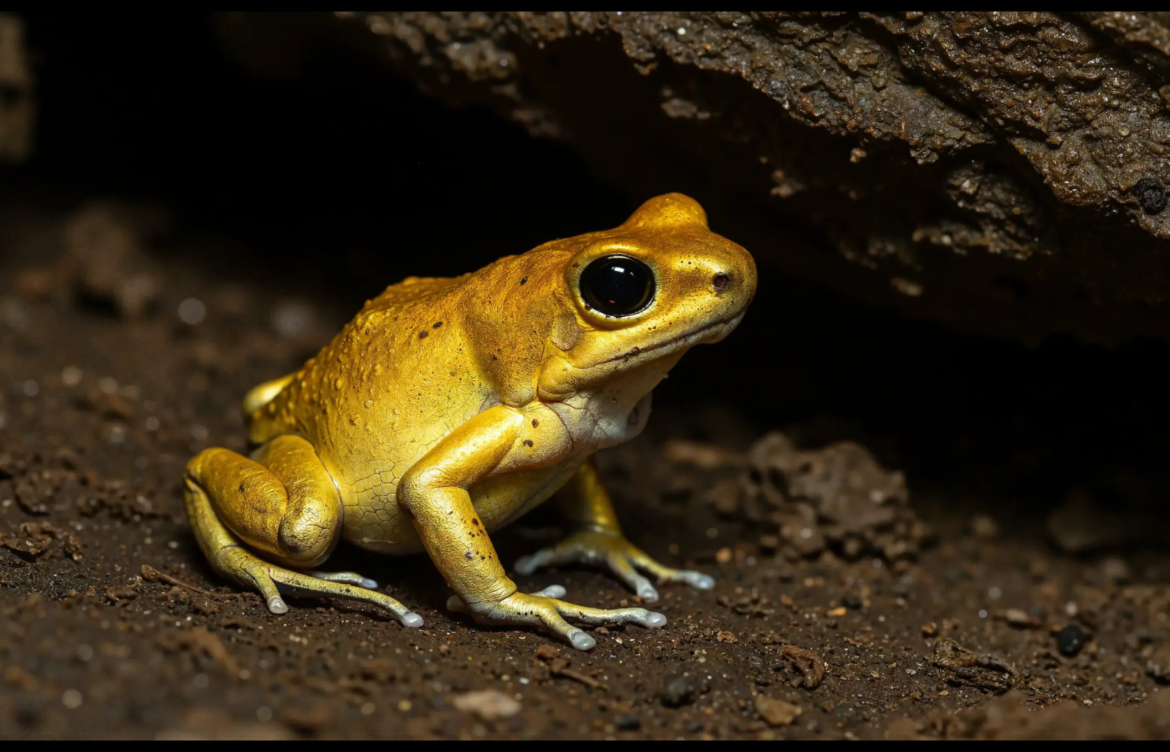
Absolutely deadly. A single golden poison dart frog carries enough batrachotoxin to kill 10 to 20 humans. Just 2 micrograms, two grains of sa, is lethal. Touch one with broken skin, and you’re facing numbness, paralysis, heart failure, possibly death.
Was that same species born in a zoo?
Completely harmless. Zero toxicity. Handlers touch them without gloves. Kids visit them safely in aquariums.
The game-changing discovery came in the 1990s: Poison dart frogs don’t make their own poison. They’re toxic sponges, absorbing alkaloids from the ants, mites, and beetles they eat. Change their diet to fruit flies and crickets? They become harmless.
This is why the pet trade exists. Every legal poison dart frog in America was captive-bred, ate non-toxic food, and poses zero poisoning risk.
The critical warning: Most people can’t tell wild from captive. That colorful frog in Costa Rica could be deadly or harmless. Guessing wrong kills.
Golden rule: In Central/South American rainforests, treat every bright frog like it wants you dead. In North America, you’re generally safe.
Meet The World’s Most Poisonous Frog
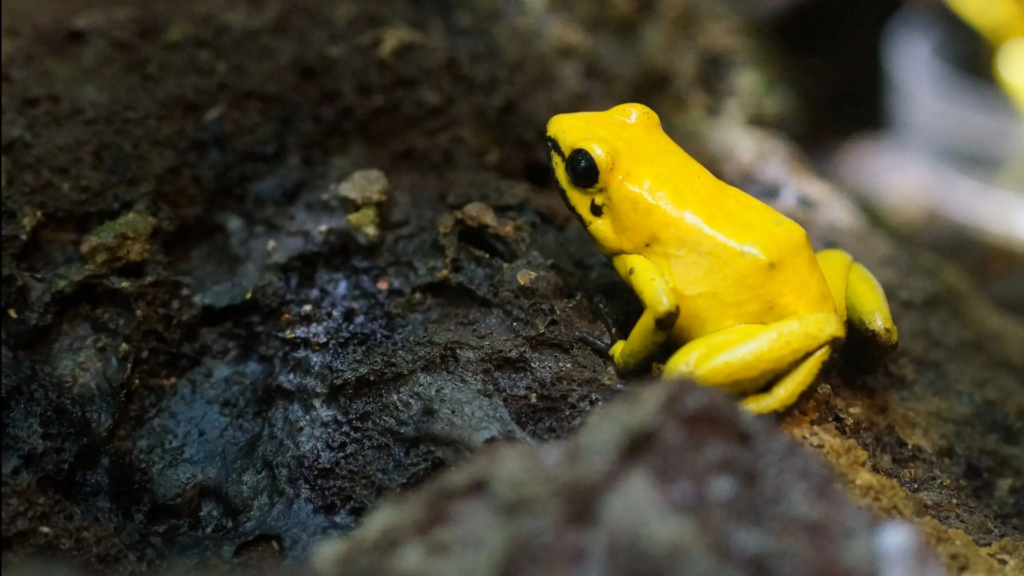
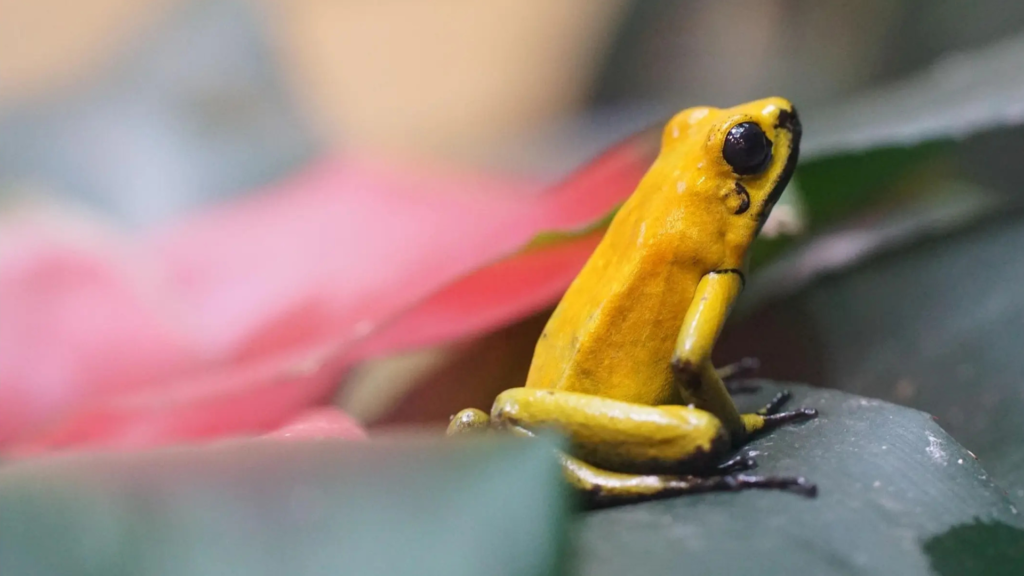
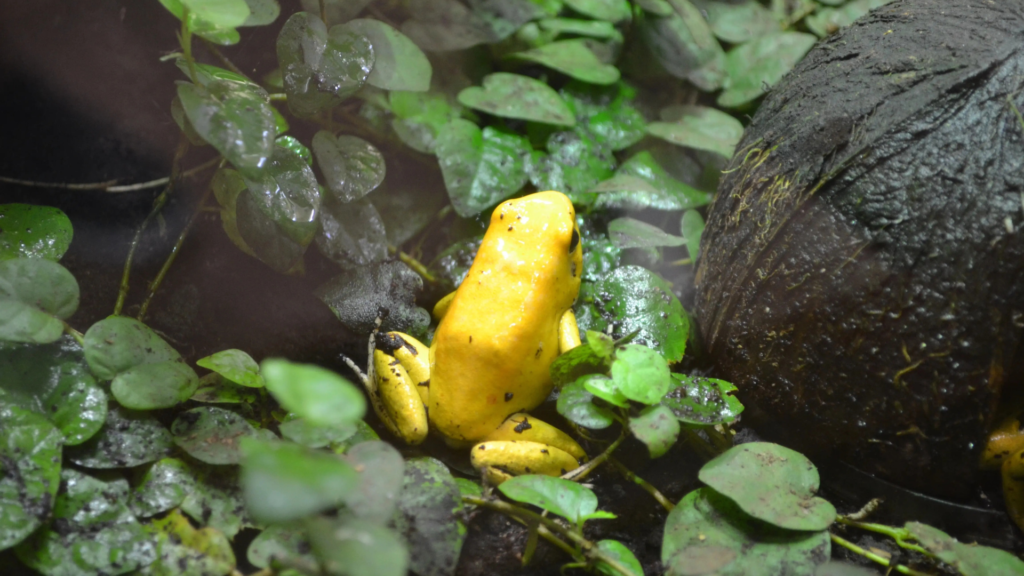
The golden poison dart frog (Phyllobates terribilis) is smaller than a paperclip but more toxic than a black mamba. One frog contains 1 milligram of batrachotoxin, enough to theoretically kill 500 people, realistically 10 to 20.
It exists in one place: Colombia’s Pacific rainforests, covering less than 5,000 square kilometers. The Emberá Chocó people have used their toxin on hunting darts for over 1,000 years.
That brilliant yellow isn’t decoration, it’s aposematic coloration, nature’s danger label. The brighter the frog, the more toxic insects it’s eaten, the deadlier it is.
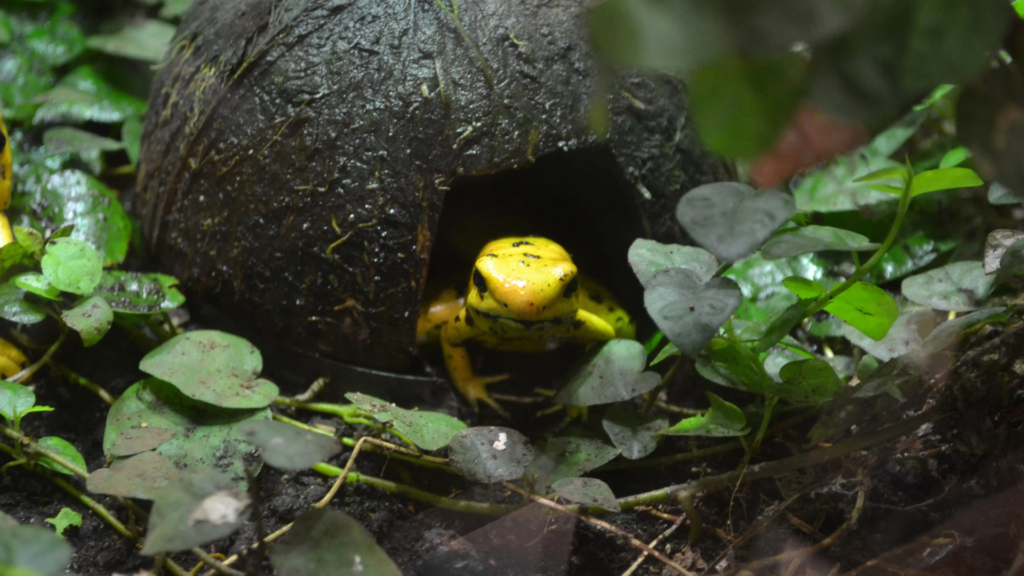
Three species you must never touch: golden poison dart frog (uniform yellow),
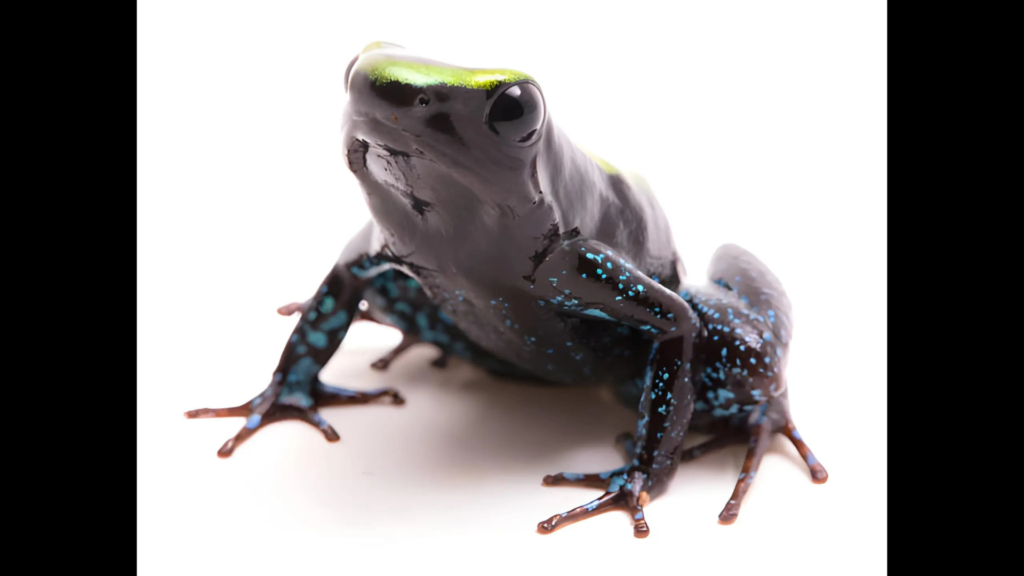
Black-legged poison dart frog (orange with black legs).
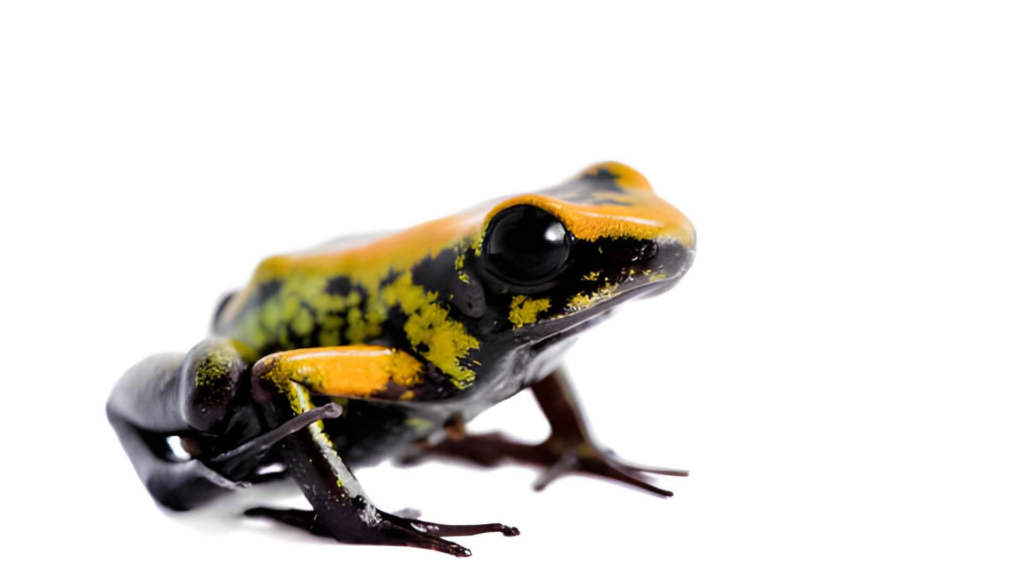
kokoe poison dart frog (mint green). All three contain batrachotoxin. All three live only in Colombia. All three can kill you.
What Really Happens When You Touch One?
Forget Hollywood’s instant death. Reality is slower and more terrifying.
0-15 minutes: Tingling and numbness at the contact point. Pins-and-needles sensation. Increased salivation. Faster heartbeat. Still manageable if you act fast.
15-30 minutes: Numbness spreads. Breathing becomes difficult. Nausea hits hard. Muscles twitch involuntarily. Panic sets in, speeding toxin circulation.
30-60 minutes: Heart rhythm goes haywire. Muscle weakness spreads. Vomiting. Possible unconsciousness. Cardiac arrhythmia begins.
1-3 hours: Complete paralysis. The diaphragm fails. Heart stops. Without ventilation and cardiac support, death occurs.
But here’s the lifesaver: Sarah’s guide poured water over her scratch for 15 solid minutes. That single action reduced toxin absorption enough to save her life.
Severity depends on open wounds, skin thickness, contact duration, and species. Brief contact through intact skin? Mild symptoms. Sustained contact with golden poison dart frog through broken skin? Fatal.
How To Identify Before You Touch?
You’re hiking when you spot a quarter-sized frog, bright blue with black spots, sitting confidently in daylight. Should you touch it?
Five-second safety check:
Color: Neon, fluorescent, candy-bright = danger. Electric blue, traffic-cone orange, lemon yellow = don’t touch. Dull browns and greens = usually safe.
Pattern: High contrast
(black with yellow, red with blue legs) = toxic. Subtle camouflage = safe.
Behavior: Active during the day? Doesn’t flee? That’s confidence from chemical weapons.
Location: Central/South American rainforest? Assume toxic. North America? Generally safe.
The confident frog rule: A frog that doesn’t flee from you has a reason. That reason is usually poison.
Are US Frogs Dangerous?
Good news: America has no deadly poison dart frogs. Zero.
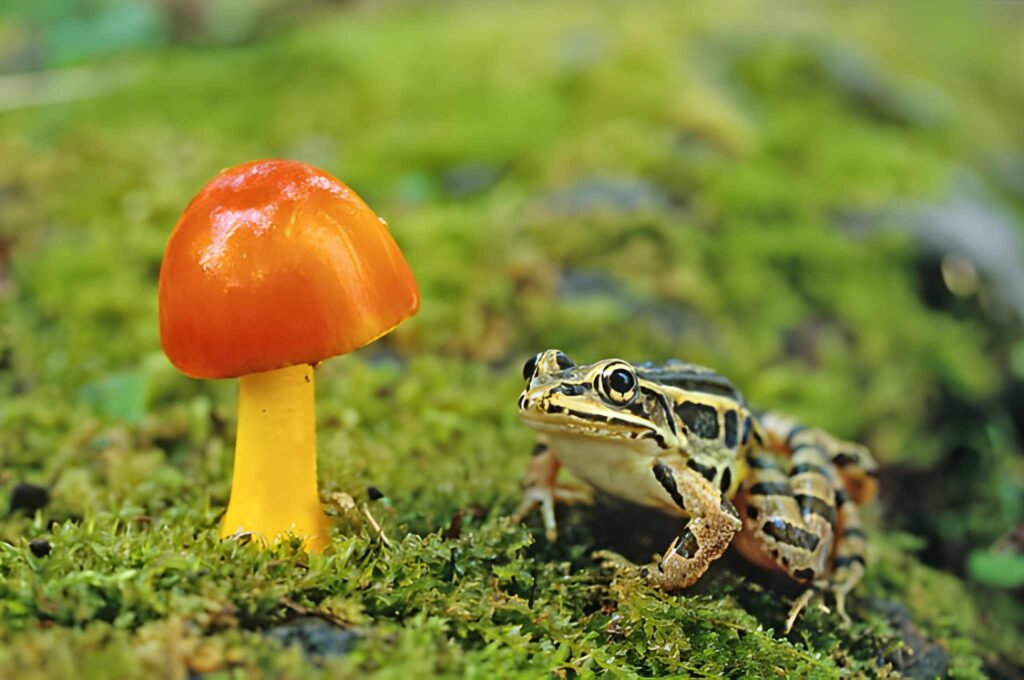
The exception: Pickerel frog (Lithobates palustris). Brown with square spots, found from Canada to South Carolina. Touch one? Your skin burns and itches intensely for hours. Painful but not lethal.
Dangerous toads:
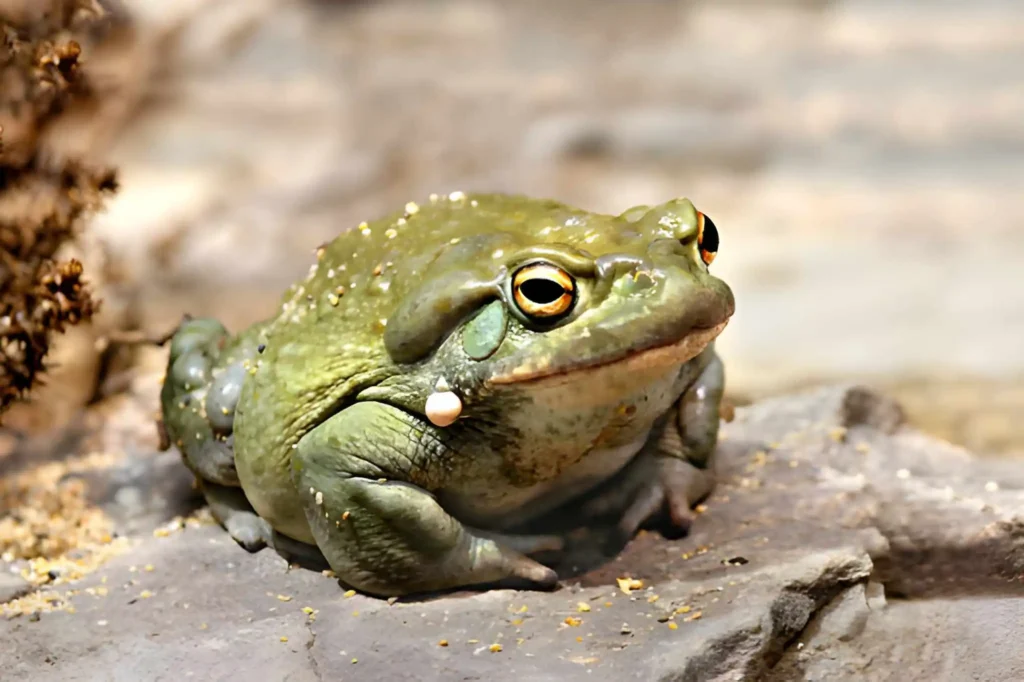
Colorado River toad (Arizona, New Mexico, California) produces bufotoxin that kills dogs. Invasive cane toad (Florida, Texas, Hawaii) kills pets yearly. Regular American toad? Harmless to humans.
Bottom line: In the US, the worst case is skin irritation. Just wash your hands after handling amphibians and keep pets away from large toads.
Emergency Protocol That Saves Lives
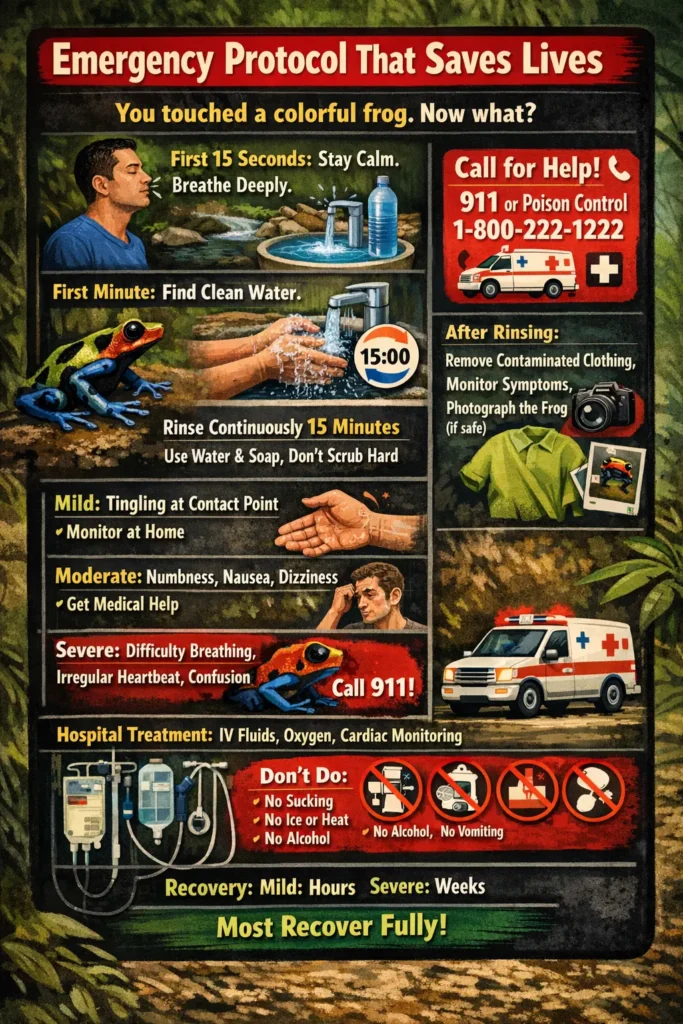
You touched a colorful frog. Now what?
First 15 seconds: Stay calm. Panic speeds toxin circulation. Breathe deeply.
First minute: Find clean water. Stream, bottle, sink, anything drinkable works.
Next 15 minutes: Rinse continuously. Not a quick splash, full 15 minutes of flowing water. Use mild soap if available. Don’t scrub hard.
While rinsing: Have someone call emergency services or poison control (US: 1-800-222-1222).
After rinsing, remove contaminated clothing. Monitor symptoms. Photograph the frog if safe.
Mild symptoms: Tingling at the contact point only. Monitor at home.
Moderate symptoms: Spreading numbness, nausea, dizziness. Get a medical evaluation.
Severe symptoms: Difficulty breathing, irregular heartbeat, weakness, and confusion. Call 911 immediately.
Hospital treatment: IV fluids, oxygen support, cardiac monitoring. No antidote exists; treatment keeps you alive while your body eliminates the toxin.
Don’t try: Sucking out poison, applying ice/heat, drinking alcohol, or inducing vomiting.
Recovery: Mild cases resolve in hours. Severe cases may need weeks. Most people recover completely with no lasting damage.
Can You Keep Them As Pets?
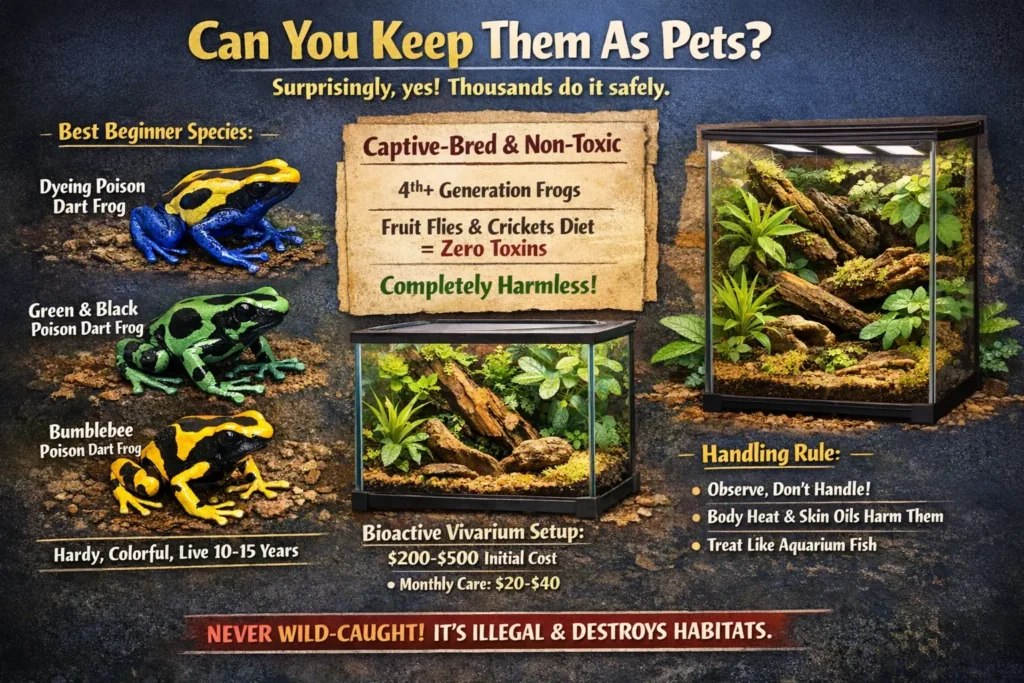
Surprisingly, yes! Thousands do it safely.
Every legal poison dart frog in the US was captive-bred, fourth or fifth generation. They’ve never eaten toxic insects. The diet of fruit flies and crickets means zero toxins. Scientific testing confirms: completely harmless.
Best beginner species: Dyeing poison dart frog, Green and Black poison dart frog, Bumblebee poison dart frog. All hardy, active during the day, stunning colors, live 10-15 years.
Setup cost: $200-500 for a complete bioactive vivarium. Monthly maintenance: $20-40.
Where to buy: Only from reputable breeders like Josh’s Frogs or Understory Enterprises. Never wild-caught, it’s illegal and destroys habitats.
Handling rule: Even non-toxic captive frogs shouldn’t be handled frequently. Your body heat stresses them. Your skin oils harm their permeable skin. Think of them as aquarium fish, observe, don’t handle.
Why It’s So Deadly?
Batrachotoxin forces sodium channels in your nerves permanently open. Normally, they open briefly and then close. Stuck open? Nerves fire uncontrollably, exhaust themselves, shut down completely.
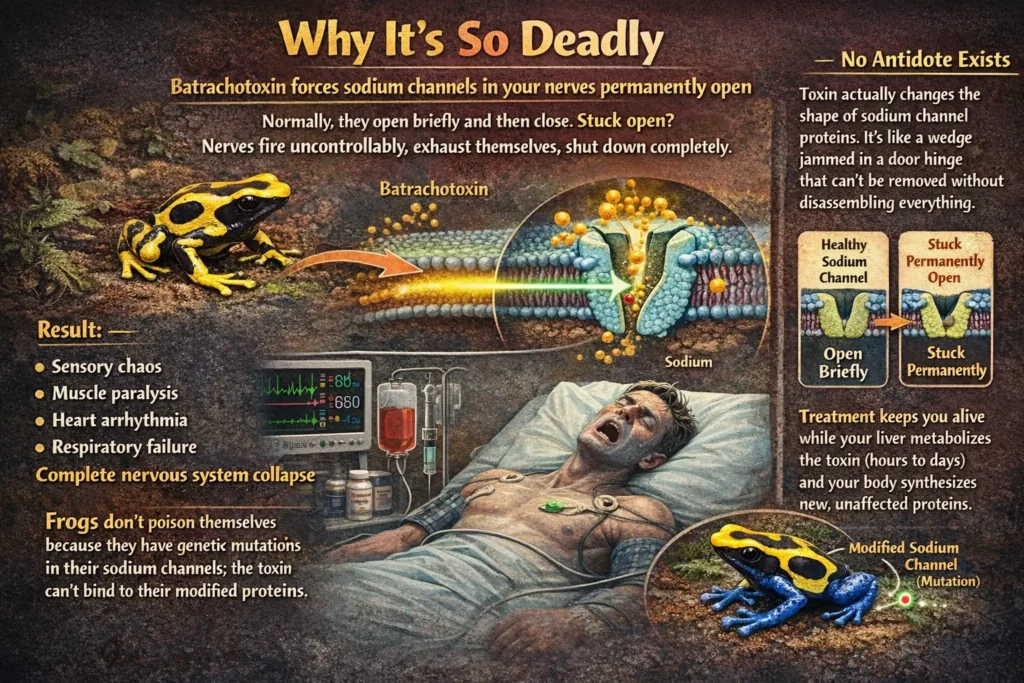
Result: Sensory chaos, muscle paralysis, heart arrhythmia, respiratory failure. Complete nervous system collapse.
No antidote exists because the toxin actually changes the shape of sodium channel proteins. It’s like a wedge jammed in a door hinge that can’t be removed without disassembling everything.
Treatment keeps you alive while your liver metabolizes the toxin (hours to days) and your body synthesizes new, unaffected proteins.
Frogs don’t poison themselves because they have genetic mutations in their sodium channels; the toxin can’t bind to their modified proteins.
Where Deadly Frogs Live?
Colombia: World’s deadliest frogs. All three Phyllobates species live here in Colombia’s Pacific rainforests exclusively.
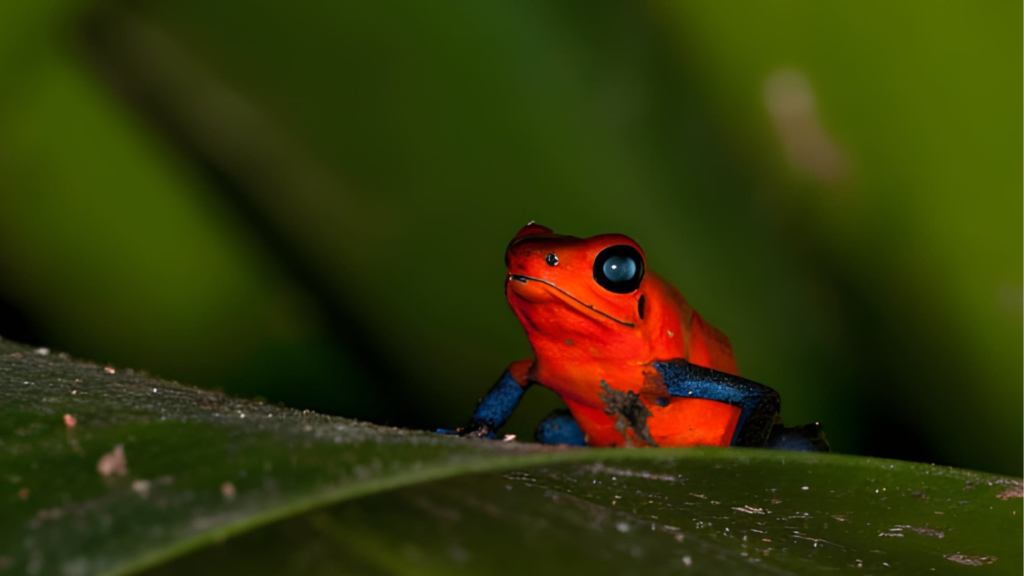
Costa Rica: High frog diversity plus heavy tourism means common encounters. Strawberry poison dart frog in Manuel Antonio.
Panama, Peru, Ecuador, Brazil: Multiple toxic species throughout rainforests.
US, Canada, Europe, Asia, Africa, Australia: No poison dart frogs at all.
Travel advice: In Central/South America, treat all colorful frogs as deadly. Don’t touch. Don’t let kids touch. Photograph from a distance.
The Truth You Need To Remember
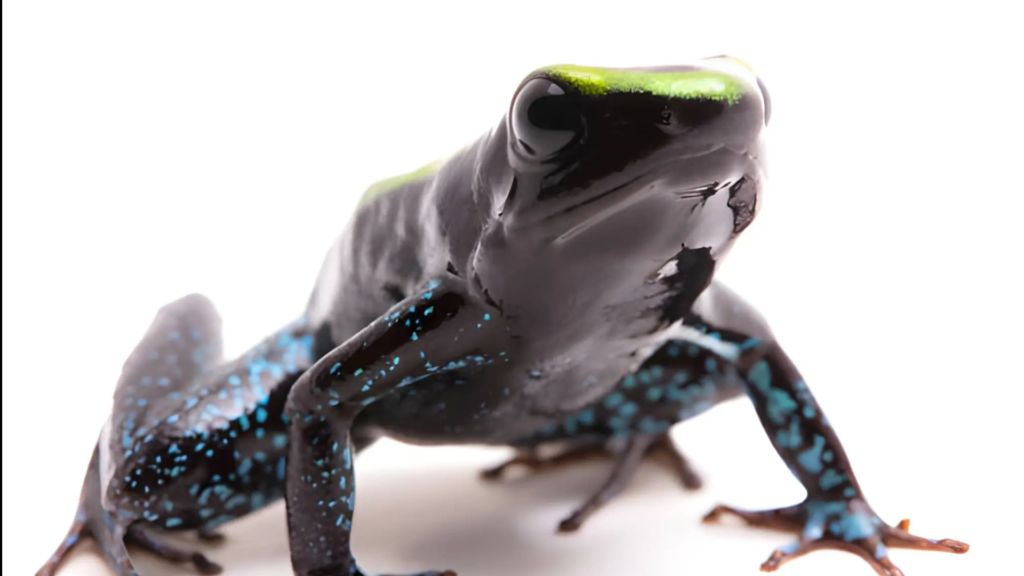
Poison dart frogs are evolutionary marvels carrying toxins for defense, not aggression. They don’t want to hurt you; they want to survive in shrinking rainforests.
Wild frogs in Colombia? Deadly. Same species captive-bred? Harmless. Context is everything.
If you visit rainforests, respect bright colors. They’re nature’s warning labels. Admire from a distance. Follow local guides.
If keeping as pets, buy captive-bred only. Provide proper care. Support conservation.
If you make contact, rinse immediately for 15 minutes minimum. That single action could save your life, just like it saved Sarah’s.
The real tragedy isn’t accidental contact; it’s losing these species forever because we destroyed their homes. Some might vanish in your lifetime.
Beauty and danger coexist in nature. Respect the boundaries. Stay safe. And maybe, just maybe, help protect the rainforests where these tiny toxic jewels still survive.
FAQs about Poison Frog
Can I touch a poison dart frog?
Wild rainforest ones? Hell no they’ll mess you up. Pet store ones? Totally safe, they’re basically colorful house frogs now.
What is the most poisonous frog?
The golden poison dart frog from Colombia is one tiny frog that packs enough punch to drop 10-20 grown adults. Nature’s tiny assassin.
What happens if a poison frog touches you?
Your fingers go numb in 5 minutes, you can’t breathe properly by 30 minutes, and without help, you’re looking at paralysis within hours.
How do I identify a poisonous frog?
If it’s neon-bright, tiny, chilling in daylight like it owns the place, and you’re in a jungle, don’t touch it, genius.
Are there poisonous frogs in the US?
Nope, we dodged that bullet. The worst we’ve got is the pickerel frog that makes your skin itch like crazy for a few hours.
What should I do if I touch one?
Rinse like your life depends on it because it does. 15 minutes under water, then call 911 or poison control ASAP.
Can poisonous frogs be pets?
Yep! Captive-bred ones are totally harmless and legal. They’re like living jewels for your terrarium, just don’t expect cuddles.
Why don’t they poison themselves?
Their bodies are basically poison-proof; they’ve got mutant sodium channels that say “nah, not today” to their own toxins.
Do they lose toxicity in captivity?
100% no toxic bugs to munch on means no poison to store. They turn into harmless little hoppers after one generation.
Which countries have deadly frogs?
Colombia’s the danger zone, then Costa Rica, Panama, Peru, basically anywhere with steamy rainforests in Central and South America.
How long until it kills you?
You’ve got maybe 2-3 hours before things get really bad, but rinse immediately and get to a hospital, most people survive.
Has anyone survived touching one?
Tons of people! The secret? Wash it off fast, stay calm, and get medical help. Quick thinking beats quick poison every time.
