

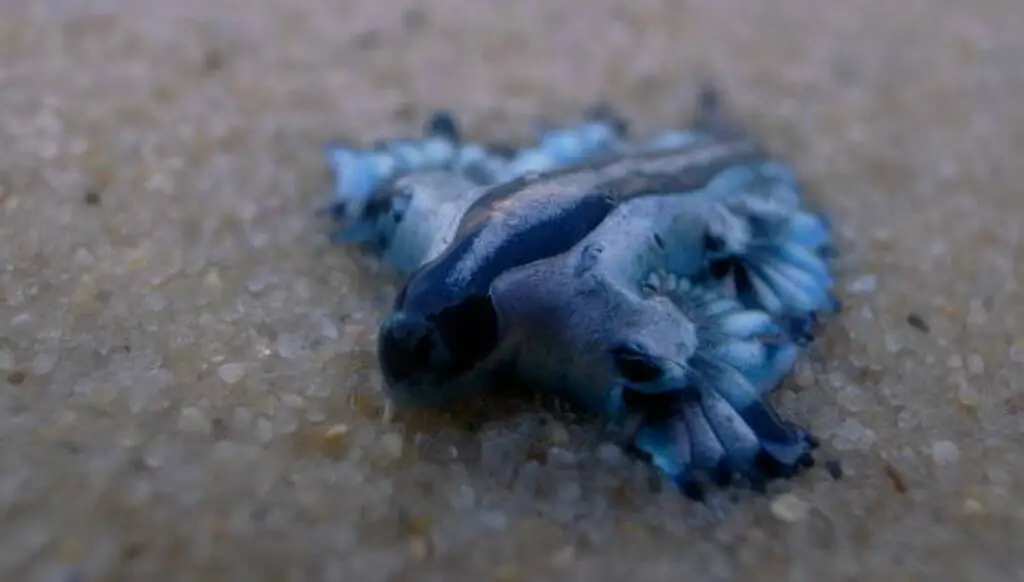
The Tiny Blue Dragon of the Ocean | The Most Beautiful and Dangerous Sea Slug on Earth
Imagine a creature that looks like a flying dragon but lives in the sea tiny, shiny, and powerful enough to take down monsters ten times its size.
It’s real, and it’s called the Blue Dragon (Glaucus atlanticus).
Most people think of dragons as fantasy creatures breathing fire, guarding treasure and living only in myths. But what if I told you that the ocean has its own real-life dragon that is Blue Dragon sea slug (Glaucus atlanticus) a tiny but powerful creature floating just below the waves? 🌊
This little ocean wanderer is bright blue, dangerously beautiful, and famous for stealing venom from jellyfish to become one of the most venomous sea creatures on Earth.
And hey, if you love quick, fun reads stay till the end! You’ll find the most-asked questions from real ocean explorers. Let’s dive in because what you’re about to discover about this “tiny dragon” might completely change how you see life beneath the sea forever. 🐉
Table of Contents
What Is the Blue Dragon sea slug (Glaucus atlanticus)?
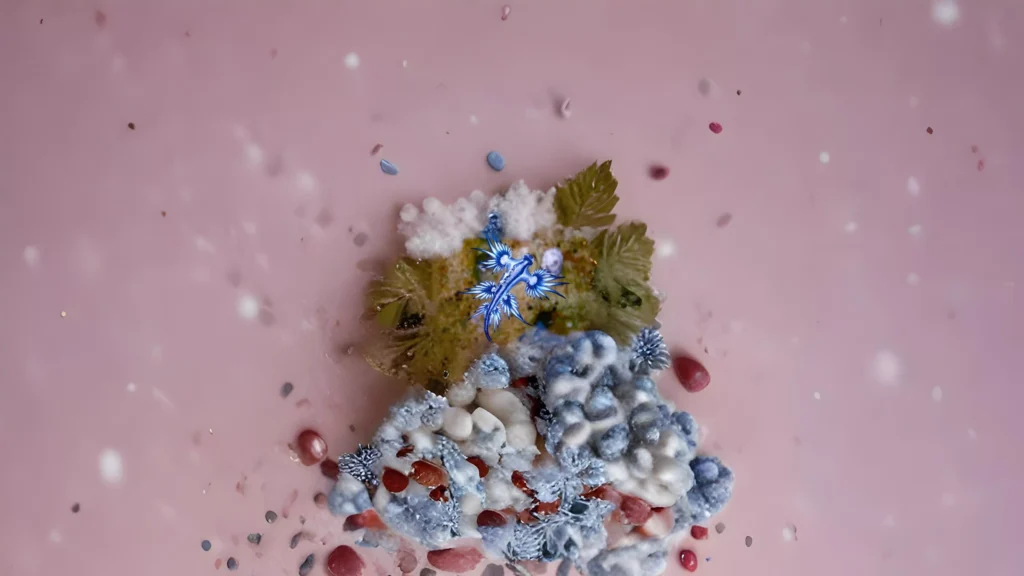
The Blue Dragon isn’t a real dragon it’s actually a sea slug (a soft sea animal without a shell).
Its scientific name is Glaucus atlanticus, and it only grows about 2 to 3 centimeters long smaller than your thumb!
But don’t let its size fool you this little creature is one of the most dangerous hunters in the ocean. It floats on the surface, showing off its shiny silver and electric-blue body, which hides a secret: it carries venom (a natural poison) powerful enough to hurt even large sea animals.
Pretty cool, right? But how does something so tiny survive in such a big ocean? Let’s find out.
Where Does the Blue Dragon Live?
The Blue sea slug Dragon loves warm, sunny seas. You can find it floating in:
- The Atlantic Ocean (near Portugal, Brazil, and South Africa),
- The Pacific Ocean (around Australia and Japan),
- The Indian Ocean, and even
- Smaller seas like the Mediterranean and Tasman Sea.
It doesn’t swim like fish do. Instead, it drifts (floats naturally) using ocean currents like a tiny sailor traveling the world on invisible waves.
And here’s the fun part: it floats upside down! Its blue belly faces the sky, and its silver back faces the sea, so it blends in perfectly from both sides a natural camouflage (hiding trick).
How Does It Float Upside Down?

The secret is inside its body. The Blue Dragon sea slug has a small air bubble (tiny pocket of gas) trapped in its stomach.
This bubble keeps it light enough to float on top of the water.
When it’s upside down, it uses the blue color to blend with the sea from above and the silver color to blend with the sky from below.
Nature made it like a living mirror so smart that most predators (animals that might eat it) can’t even see it!
What Does the Blue Dragon Eat? (Its Deadly Diet)

Now comes the crazy part.
The Blue Dragon’s favorite food is the Portuguese Man o’ War a jellyfish-like creature famous for its painful sting.
Instead of running away, the Blue Dragon attacks it! It uses a special tongue called a radula (a ribbon covered with tiny teeth) to bite and suck out the Man o’ War’s venomous tentacles.
Then, it does something unbelievable it stores those venom cells inside its own body and uses them as weapons!
That means this tiny slug becomes more poisonous than the creature it ate. Talk about stealing your enemy’s power! ⚡
How Dangerous Is the Blue Dragon to Humans?
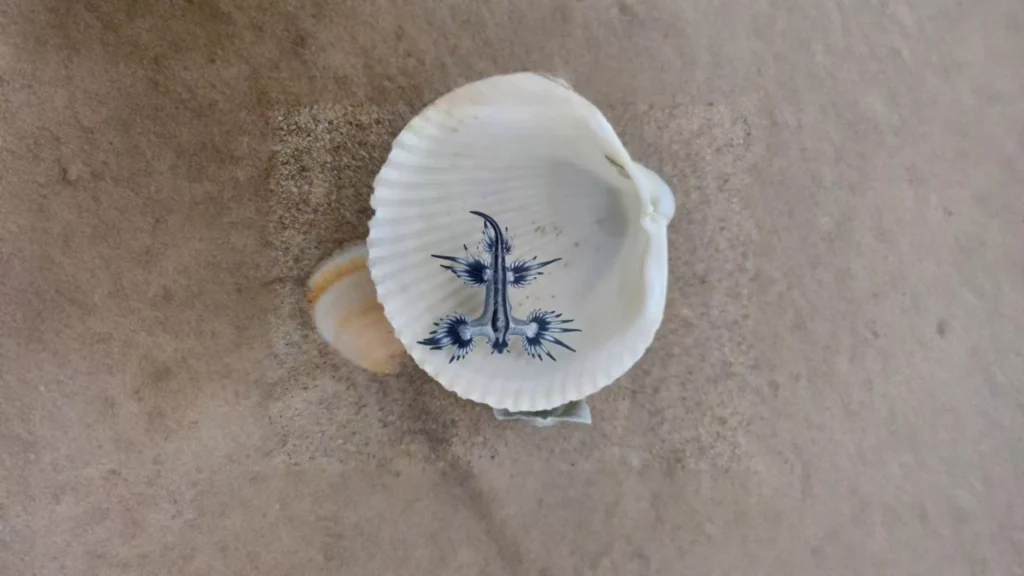
Is It dangerous for humans so, If you ever see one washed up on the beach don’t touch it!
Even after it dies, its venom (poison) still works.
A sting from a Blue Dragon can cause:
- Pain and burning,
- Red marks or rashes,
- Swelling of the skin.
If that ever happens, rinse with seawater (not fresh water) and gently remove any tiny tentacles.
Never rub the skin — it makes things worse.
And if pain continues, seek medical help quickly.
Why Does It Look Like a Dragon?
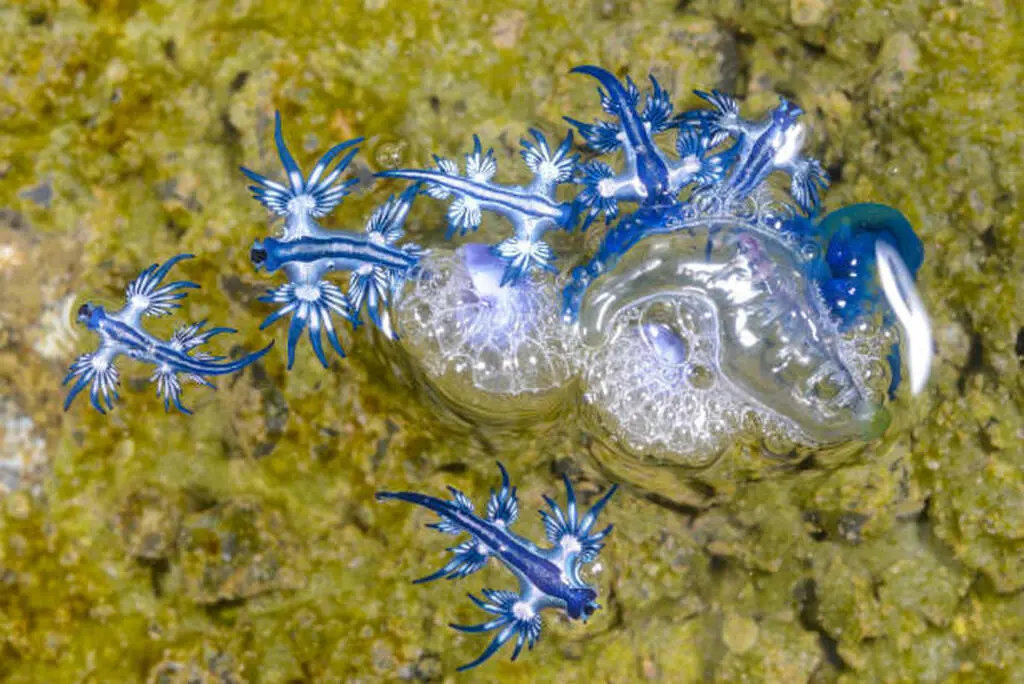
When you look closely, you’ll see the Blue Dragon’s body has blue wing-like arms called cerata (say: seh-rah-tah).
Each arm is thin, shiny, and shaped like a flame just like the wings of a tiny dragon.
These cerata are not just beautiful they help the Blue Dragon:
- Breathe (by taking in oxygen through the skin),
- Store venom (inside special sacs), and
- Scare predators with their bright warning colors.
So yes, it really looks and acts like a dragon — just one that floats instead of flies!
How Does the Blue Dragon Reproduce (Have Babies)?

Here’s another surprise every Blue Dragon is both male and female at the same time.
This is called hermaphroditism (having both types of reproductive organs).
When two Blue Dragons meet, they exchange sperm with each other. Later, both of them lay long strings of eggs on floating objects like seaweed or driftwood.
When the eggs hatch, baby Blue Dragons begin their adventure floating, feeding, and growing their shiny blue armor.
So basically, each one can be both mom and dad how amazing is that?
Predators and Survival
Very few animals dare to eat the Blue Dragon because of its venom. But sometimes, sea turtles or larger sea slugs might take the risk.
To survive, the Blue Dragon uses three powerful tricks:
- Camouflage (blending into the sea and sky),
- Venom storage (stealing poison from jellyfish),
- Warning colors (bright blue signals danger).
It’s like a superhero wearing armor and carrying a secret weapon — small but unstoppable.
How Climate Change Affects the Blue Dragon

In recent years, more people have spotted Blue Dragons washed up on beaches — especially in Australia, South Africa, and California.
Scientists believe this happens because of climate change (rising ocean temperatures) and stronger currents that push them closer to shore.
While they look amazing, finding them on beaches can mean that ocean patterns are changing — a silent message from nature that the sea is warming faster than before.
Why Is the Blue Dragon Important for Science?
Scientists love studying the Blue Dragon because it helps them understand:
- How tiny animals survive with borrowed venom,
- How camouflage and color protect ocean creatures, and
- How climate change is shifting marine life around the world.
It also reminds us that size doesn’t define strength — even the smallest creature can have the most fascinating secrets.
Conclusion — The Tiny Dragon That Rules the Waves
The Blue Dragon is a living miracle a creature that floats upside down, fights jellyfish, and shines like a jewel in the sea.
It’s both beautiful and dangerous, tiny and powerful, gentle and fierce all at once.
It reminds us that the ocean hides wonders beyond imagination — where even something smaller than your thumb can hold the power of a dragon.
FAQs about Blue Sea Dragon
What is the Blue Dragon’s scientific name?
It’s called Glaucus atlanticus.
Is the Blue Dragon really a dragon?
No, it’s a sea slug (a soft-bodied ocean animal) that just looks like one.
How big is it?
Only about 2–3 cm long smaller than your thumb!
Is it dangerous to humans?
Yes, it can sting painfully because it stores venom from jellyfish.
What does it eat?
It eats the Portuguese Man o’ War and other venomous jellyfish.
Where does it live?
In warm oceans like the Atlantic, Pacific, and Indian Seas.
Can it swim?
Not really it floats using an air bubble and ocean currents.
How does it have babies?
It’s both male and female, so two Blue Dragons exchange sperm, and both lay eggs.
Why is it blue and silver?
For camouflage blue blends with the sea, silver with the sky.
Why are scientists studying it?
To learn about venom, survival, and climate effects on marine life.
