

5 Incredible Facts about Underwater Volcanoes Beneath the Ocean
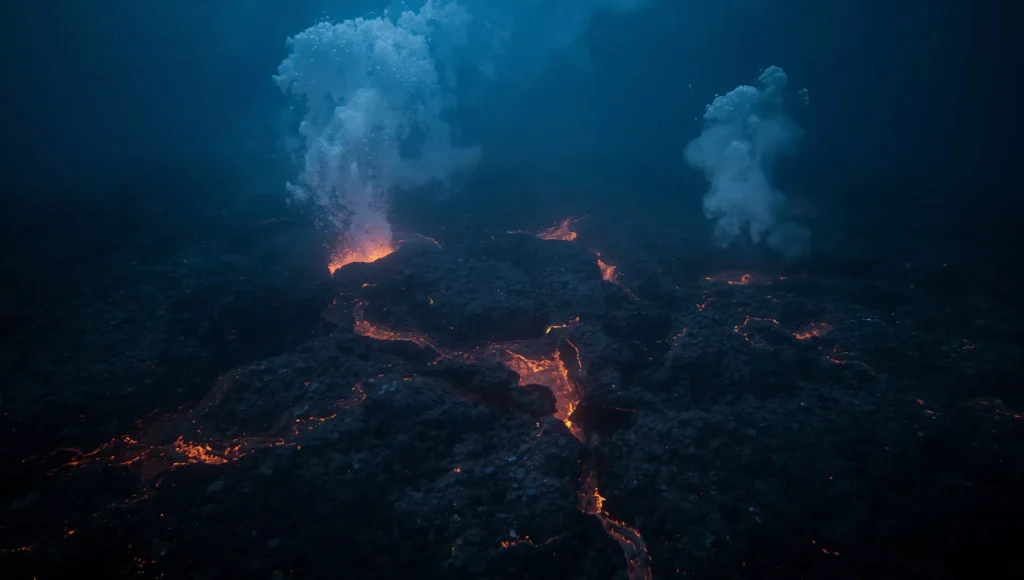
Deep below the blue ocean, something powerful is happening, mountains of fire are quietly building new world.
What if I told you that the ocean floor is alive and it’s constantly changing?
Most people imagine volcanoes as fiery mountains bursting with smoke and lava on land. But did you know that more than half of Earth’s volcanoes are hidden under the sea?
Yes beneath those calm waves, there’s an unseen world where hot magma meets cold water, creating explosions, new land, and even entire islands!
Here are some fascinating facts about underwater volcanoes that reveal how these hidden giants shape our planet from the depths of the ocean.
These hidden volcanoes are called submarine volcanoes (volcanoes under the ocean surface) and they are among nature’s most powerful builders. Curious to know how they form and what happens when they erupt underwater? Let’s dive deep and uncover their secret world below the sea.
And hey, if you’re one of those curious minds who loves quick and simple reads don’t worry! At the end of this blog, you’ll find a fun easy-to-understand (most-asked Question) FAQs from real ocean lovers around the world. 🌍 So keep swimming with me till the end because What you find at the end might change how you see Earth.
Table of Contents
What Is a Volcano Under the Sea ?
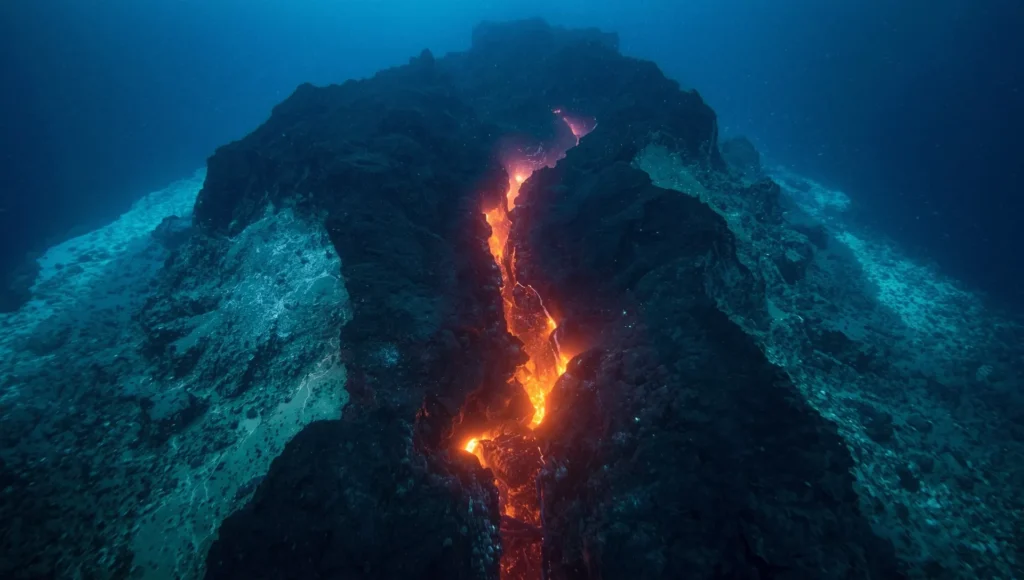
A volcano under the sea (also called an underwater or submarine volcano) is a crack or opening in the Earth’s crust found at the bottom of oceans. Through this opening, magma melted rock from deep inside the Earth pushes upward.
When the pressure becomes too strong, it erupts! The hot magma meets the freezing ocean water and cools down quickly, turning into new rocks. Over time, these rocks pile up, forming underwater mountains and sometimes, they grow so tall that they rise above the sea surface and become islands.
But wait how can fire and water exist together without putting each other out? That’s where the real magic begins. Among the most fascinating facts about underwater volcano is how they can erupt in freezing water and still create new land from molten rock.
How Do Underwater Volcano Form?
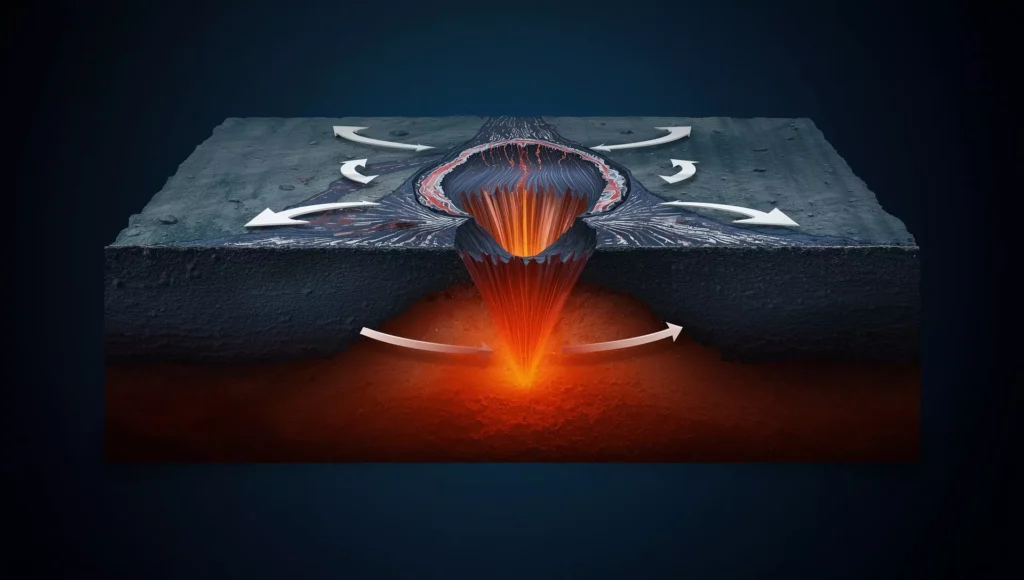
Underwater volcanoes usually form where tectonic plates (huge pieces of the Earth’s crust) meet or move apart.
At these places, the Earth’s surface is weak and magma can escape through cracks.
There are two main spots where this happens:
- Mid-ocean ridges: Long underwater mountain chains where a new ocean floor is born.
- Subduction zones: Places where one tectonic plate slides under another, melting rock and creating magma.
Every second, new seafloor is being made because of these underwater eruptions imagine the ocean slowly building its own landscape, piece by piece! 🌍
And you might wonder do these eruptions look the same as the fiery ones on land? Let’s see what happens when lava meets the sea.
What Happens When a Volcano Erupts Underwater?
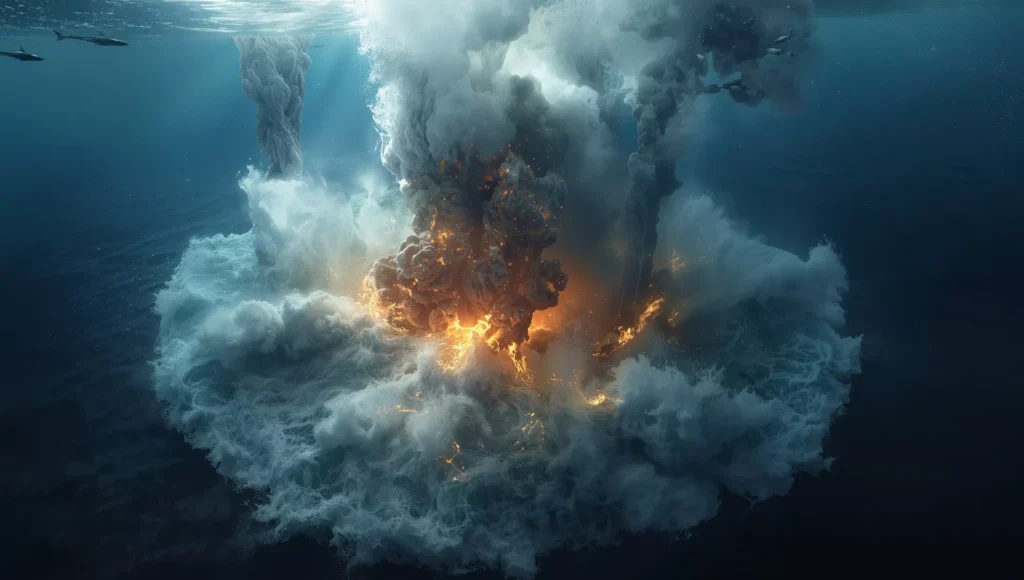
When magma escapes under the sea, it meets cold water and something amazing happens.
The lava cools down so quickly that it turns into strange, rounded shapes called pillow lavas. They look like giant balloons or smooth stones lying across the ocean floor.
Sometimes, if the eruption is powerful enough, gas bubbles explode and send ash, steam, and rock pieces shooting up through the water even reaching the surface.
If this keeps happening, layer by layer, a new volcanic island can form!
Can you believe that famous islands like Iceland and Hawaii were born from underwater volcano long ago?
But these eruptions don’t just build land they also change the ocean itself. One of the lesser-known facts about underwater volcanoes is that their eruptions often go completely unseen, hidden deep below where light can’t reach. Another fascinating fact about underwater volcanoes is that they support entire ecosystems, proving that life can exist even without sunlight.
How Underwater Volcanoes Shape the Earth and Oceans
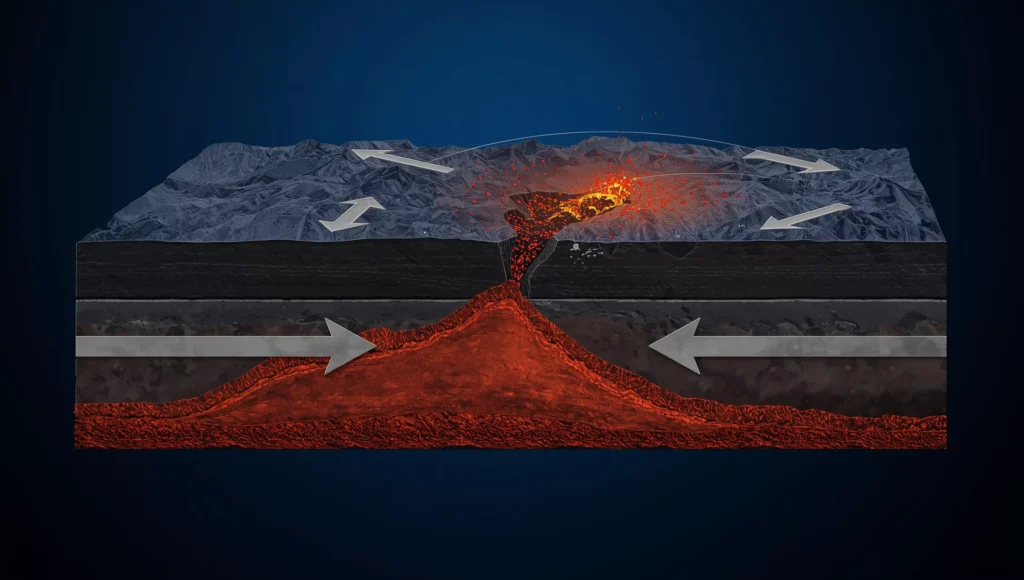
Every eruption under the ocean changes the world around it even though we can’t see it.
When magma cools and hardens, it forms a new crust, making the ocean floor grow wider. That’s how continents slowly drift apart over millions of years!
Underwater volcanoes also release minerals and gases that feed tiny sea creatures. Around some volcanoes, scientists have discovered hydrothermal vents places where hot, mineral-rich water shoots out.
These vents are like underwater oases, full of strange life forms that can survive without sunlight.
Isn’t it fascinating? But you might be thinking what if one of these volcanoes erupts near us? Let’s explore that next.
Can Underwater Volcanoes Cause Tsunamis?
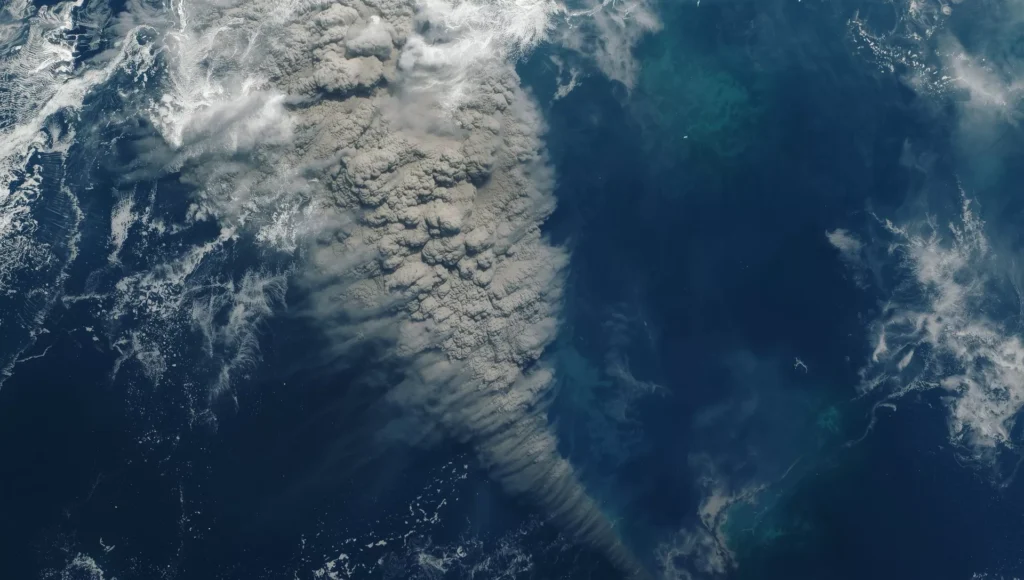
Yes sometimes they can! When a large volcano erupts under the sea, the sudden movement of water can create giant waves called tsunamis.
These waves can travel thousands of kilometers across the ocean and hit coastlines far away.
One famous example is the Hunga Tonga-Hunga Haʻapai eruption in 2022. It was one of the most powerful underwater eruptions ever recorded. It created massive clouds of ash and waves that were felt across the Pacific Ocean.
But don’t worry scientists around the world are always watching volcanoes, both on land and under the sea, to warn people early and keep everyone safe.
Still, what’s hiding deep below where no sunlight reaches remains one of Earth’s greatest mysteries.
Life Around Underwater Volcanoes
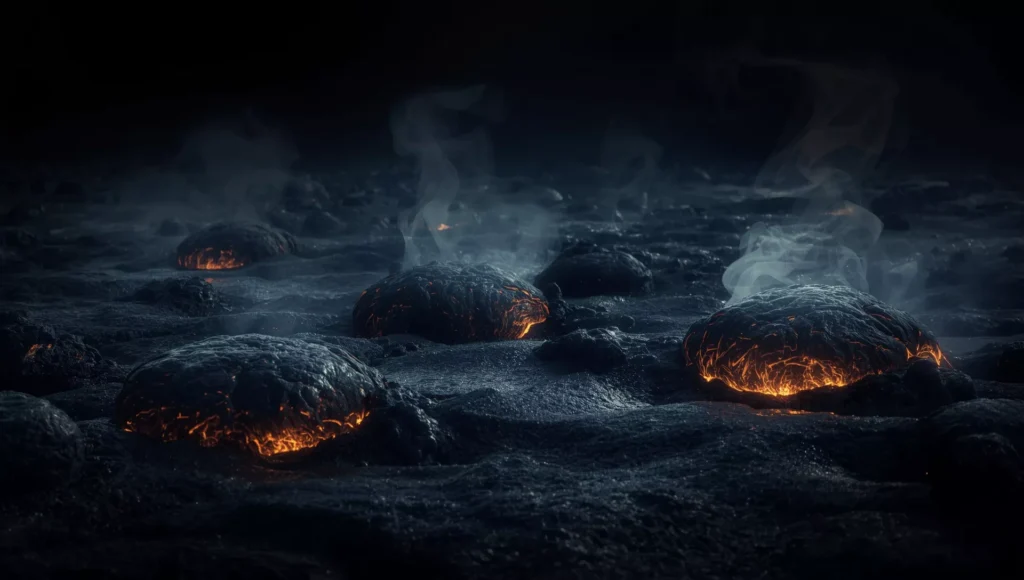
Even in complete darkness, underwater volcanoes give life a home.
Around their hot vents, tiny creatures live off the minerals that come out not sunlight. This is called chemosynthesis, a process that helps life survive in places where no plants can grow.
There are glowing worms, ghost-white crabs and even giant tube worms that can grow taller than a child! According to scientists who discovered new ecosystems at deep-sea hydrothermal vents. Scientists believe that life on Earth might have first started around these underwater volcanoes billions of years ago.
And who knows? Maybe one day we’ll find life around similar volcanoes on other planets too.
Conclusion: The Fire That Lives Beneath the Waves
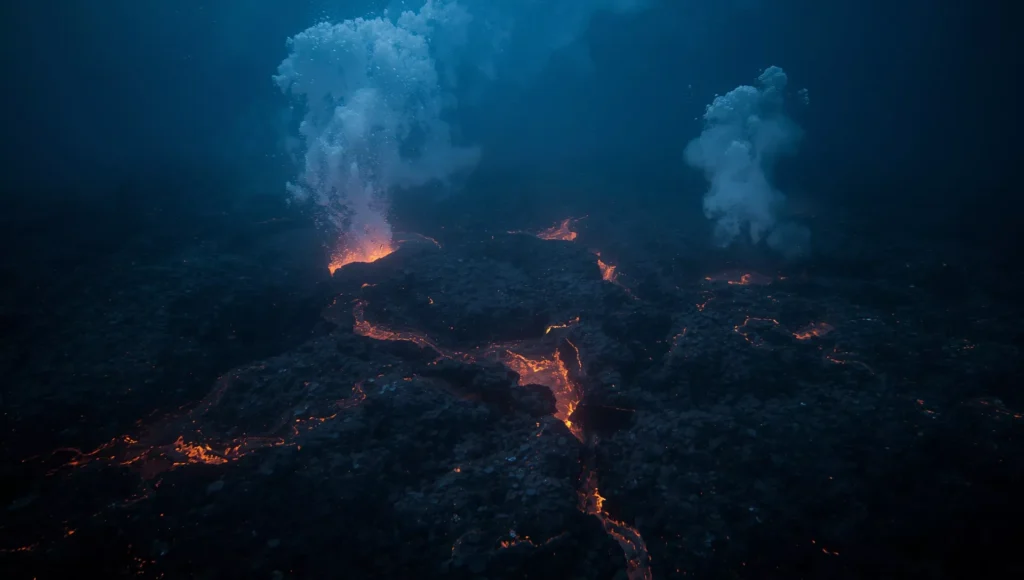
Underwater volcanoes are not just hidden explosions — they are the architects of Earth, building new land, feeding ocean life, and shaping our planet’s surface bit by bit.
The next time you see the ocean, remember beneath that calm, blue world, there are mountains of fire working silently, creating the future of our planet. By now, you’ve explored some of the most interesting facts about underwater volcanoes, from how they erupt to how they give birth to new islands and even life itself.
Frequently Asked Questions
What is an underwater volcano?
It’s a volcano that forms and erupts under the sea, where magma meets ocean water.
How many volcanoes are under the sea?
More than half of all volcanoes on Earth are underwater — that’s thousands of them!
Can underwater volcanoes cause tsunamis?
Yes, big eruptions can push huge waves, but scientists track them for safety.
How do underwater volcanoes make new islands?
Repeated eruptions pile up layers of cooled lava until they rise above the water.
What is a hydrothermal vent?
It’s a hot underwater spring formed near volcanoes that supports strange deep-sea life.
Are underwater volcanoes dangerous?
Most are deep and safe, but a few near coasts can cause waves or ash clouds.
Can life survive around underwater volcanoes?
Yes! Many unique sea creatures live around hot vents without sunlight.